
Sesbania bispinosa
Sesbania bispinosa
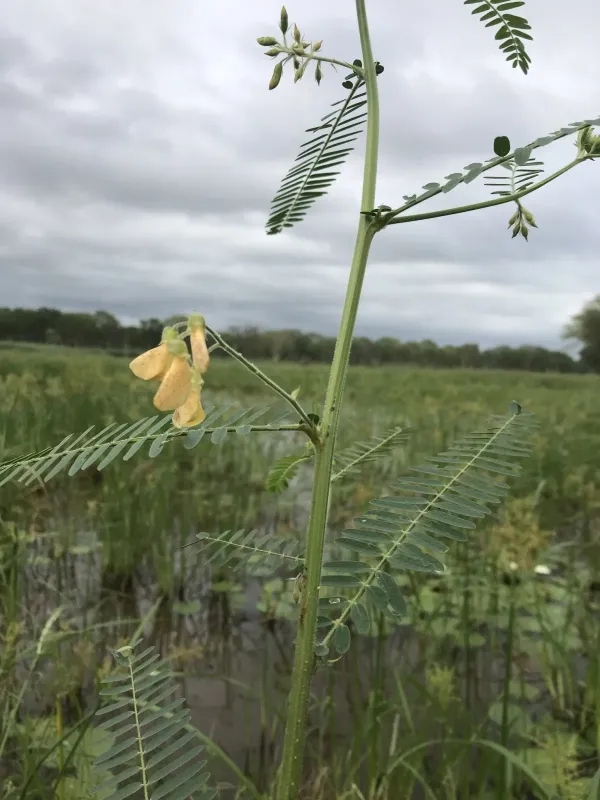
Description
Sowing dates
Sesbania bispinosa, commonly known as spiny sesbania, is a fast-growing annual legume well-adapted to tropical and subtropical regions. Sowing is typically performed at the onset of the rainy season or when soil temperatures are consistently high, as it requires warmth for germination.
The seeds should be sown at a depth of 2 to 3 cm. Proper seedbed preparation is essential to ensure moisture contact, as the seeds have a hard seed coat and often benefit from scarification before being planted to increase overall germination rates.
For green manure purposes, a seeding rate of 40–60 kg/ha is recommended to ensure a dense stand. This high density helps the crop outcompete weeds and rapidly cover the ground, protecting the soil from direct solar radiation and erosion.
Growth is exceptionally rapid under favorable conditions, with seedlings emerging within a week of sowing. This rapid development is one of the key traits that makes it an attractive choice for farmers looking to quickly prepare a field for the next major crop.
In crop rotation, it serves as an excellent preceding crop. Its ability to grow quickly allows for its inclusion even in tight cropping calendars, providing significant soil improvements within a 60–90 day growing period.
Growing requirements
Sesbania bispinosa is renowned for its remarkable tolerance to diverse soil conditions, including saline, alkaline, and waterlogged soils. This adaptability allows for the reclamation of lands that are otherwise considered unsuitable for conventional farming.
The plant thrives in temperatures ranging from +25°C to +35°C. It is strictly a warm-season crop and is highly susceptible to frost, which limits its cultivation range to tropical and warm temperate zones during their respective growing seasons.
As a legume, it forms a symbiotic relationship with nitrogen-fixing bacteria in its root nodules. This process significantly enriches the soil with atmospheric nitrogen, effectively reducing the need for chemical fertilizers in subsequent crop cycles.
Water availability is crucial during the early stages of establishment. While it is known for drought tolerance once established, maximum biomass production is achieved when the crop receives regular moisture, particularly on heavy clay soils.
High light intensity is required for optimal performance. The plant is a sun-loving species and will exhibit stunted growth if shaded by other taller crops or in dense canopy conditions. Full sun exposure ensures strong stalk development and branching.
Yield
The biomass yield of Sesbania bispinosa can range from 20 to 40 tonnes per hectare. This high yield provides a substantial amount of organic matter when incorporated into the soil, significantly improving soil structure and water-holding capacity.
In addition to biomass, the root system penetrates deep into the soil profile. This action helps break up compacted subsoil layers and improves overall porosity, facilitating better movement of air and water throughout the soil matrix.
The nitrogen content in the green foliage is quite high, serving as a natural fertilizer. Incorporating this biomass into the soil can provide a nitrogen boost that is often equivalent to several bags of synthetic urea per hectare.
Seed production can reach up to 1.5 tonnes per hectare under specialized management. Harvesting for seed requires careful timing and monitoring to prevent excessive shattering of the pods in the field, which can lead to significant yield loss.
Over several seasons of cultivation, the continuous incorporation of Sesbania biomass is known to reduce soil salinity levels. This makes it a strategic tool for farmers managing lands affected by long-term irrigation and salt accumulation.
Main diseases and pests
Sesbania bispinosa is generally resistant to many common pests, which is a major advantage for sustainable farming systems. However, it can occasionally be affected by leaf-feeding insects, such as lepidopteran larvae, during outbreaks.
Diseases are mostly related to high moisture levels. Root rot and damping-off can occur if the field is poorly drained or if there is standing water for extended periods, especially during the seedling stage.
- Leaf-feeding caterpillars and other insects.
- Root rot due to waterlogging.
- Powdery mildew in arid periods.
- Root-knot nematodes in highly infested soils.
Effective management focuses on site selection and ensuring proper drainage rather than relying on chemical pesticides. If insect pressure becomes high, biological control methods are preferred, given that the crop is often intended for green manure.
Healthy, rapidly growing plants are the best defense against threats. Providing optimal growing conditions and following recommended crop rotation practices significantly mitigates the risks associated with pests and diseases.
Harvesting
The most common method of harvest is the incorporation of the biomass into the soil as green manure. This is best done during the early flowering stage, before the stalks become too woody and the nitrogen content begins to decline.
Tillage equipment, such as disc harrows or plows, is used to chop and incorporate the plant material. Shredding the biomass before incorporation speeds up the decomposition process, allowing nutrients to become available for the next crop faster.
When used as animal fodder, the crop should be harvested before the stems become fibrous. The leaves are rich in crude protein, making them a high-quality supplementary feed for livestock in regions where forage is otherwise scarce.
For seed harvesting, the pods should be allowed to mature until they turn dark brown. Harvesting should be performed promptly to avoid the pods splitting and scattering seeds, which often occurs under the intense heat of the sun.
Beyond green manure and forage, the stems of mature plants can be processed to extract fibers. These fibers have historical and industrial uses in the production of cordage, paper, and various artisanal crafts, demonstrating the plant's economic versatility.