
Sesbania benthamiana
Sesbania benthamiana
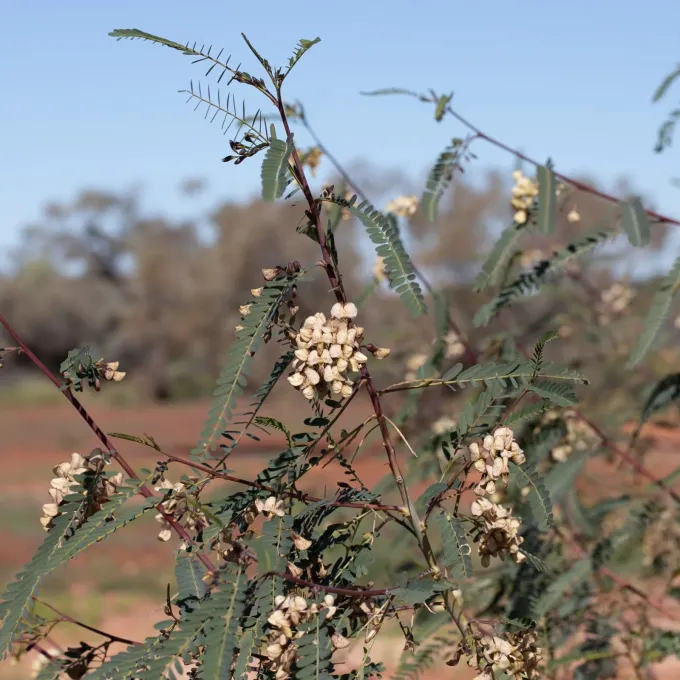
Description
Sowing dates
Sowing Sesbania benthamiana should occur when temperatures are consistently warm, as this species requires significant soil heat to germinate successfully. Late spring or early summer is the ideal window to avoid any potential frost damage.
Prior to planting, seeds should be scarified to improve germination rates significantly. The seeding rate is determined by the end-use, with higher densities typically required for green manure applications compared to seed production.
The seeds are generally planted at a depth of 2 to 4 centimeters. In sandy or lighter soils, planting slightly deeper is recommended to ensure the seed has access to adequate soil moisture during the initial development stages.
Row planting with proper spacing is essential to ensure easy field maintenance during the early growth phases. Immediate light rolling of the soil after sowing helps ensure proper seed-to-soil contact for uniform emergence.
As a member of the Fabaceae family, it is crucial to inoculate the seeds with specific Rhizobium strains. This ensures the plant establishes the necessary nodules for effective atmospheric nitrogen fixation.
Growing requirements
Sesbania benthamiana is inherently tropical and thrives in environments with long, frost-free growing seasons. It exhibits remarkable resilience to high temperatures and prolonged periods of drought, making it ideal for arid regions.
The crop is highly adaptable to a variety of soil types, including saline and alkaline conditions where many other crops struggle. It also shows a unique tolerance for waterlogged soils, which is rare for many legumes.
Full solar exposure is required for the plant to achieve its maximum biomass potential. Shading should be avoided at all costs, as it significantly inhibits the photosynthetic rate and overall vegetative development of the plant.
While known for its drought tolerance, the application of supplemental irrigation during critical growth stages will drastically increase the yield of green biomass. This is especially true in areas with erratic rainfall patterns.
The plant does not require high levels of soil fertility due to its nitrogen-fixing capabilities. However, on highly depleted soils, a small amount of phosphorus fertilizer can help boost initial root establishment.
Yield
One of the primary benefits of Sesbania benthamiana is its rapid accumulation of biomass. Under optimal conditions, the plant can produce between 30 and 50 metric tons of green manure per hectare in a single season.
The crop is recognized for its high protein content, which adds value when utilized as a forage resource for livestock. Multiple cuts can be taken throughout the season if the plants are managed correctly before woody stems form.
Beyond green manure, the plant acts as a powerful soil conditioner. Its deep, robust root system breaks up compacted soil layers and improves the physical structure of the earth for future crops.
When grown specifically for seed, yields typically range from 800 to 1200 kilograms per hectare. Careful management of water during the pod-filling stage is necessary to ensure high seed quality and quantity.
The nitrogen contribution from the decomposing plant matter provides a significant boost to subsequent cereal crops, often reducing the need for synthetic nitrogen fertilizers in the following season.
Main diseases and pests
The crop is generally resistant to most pests; however, root rot can occur in conditions where soil drainage is extremely poor. Maintaining a balanced rotation schedule effectively prevents most soil-borne pathogens.
Insects that target foliage and flowers are the most common concern. Implementing integrated pest management (IPM) strategies, including biological control agents, is preferred over chemical interventions to maintain ecological balance.
Aphid infestations on young stems can weaken the plants and increase the risk of viral transmission. Regular scouting of the field allows for early intervention, minimizing the need for broad-spectrum insecticides.
Fungal issues on leaves typically arise when planting density is too high, leading to poor air circulation within the canopy. Ensuring adequate spacing between rows is a simple but vital preventive measure.
Pests that feed on developing seed pods can impact seed production. Monitoring during the pod maturation phase is essential to ensure that any necessary controls are applied at the right time.
Harvesting
The timing for harvesting green manure depends on the desired nutritional profile, with the early flowering stage being the most popular for high nutrient accumulation. At this point, the plant tissues are still soft and easily incorporated.
For seed harvesting, wait until the pods have turned brown and dried naturally on the plant. It is crucial to monitor the field closely to prevent seed shatter, which leads to significant losses if delayed.
After mowing the green biomass, immediate incorporation into the soil is recommended to maximize the retention of nitrogen and organic matter. Delaying this process can lead to significant nutrient loss.
Seed material requires thorough cleaning and drying to reach a moisture content of approximately 12-14%. Properly stored seeds can maintain high germination rates for extended periods.
Disposing of crop residues correctly after harvest helps maintain field hygiene, preventing the carry-over of potential pests and pathogens to the subsequent crop cycle.