
Sesbania cannabina
Sesbania cannabina (Retz) Poir.
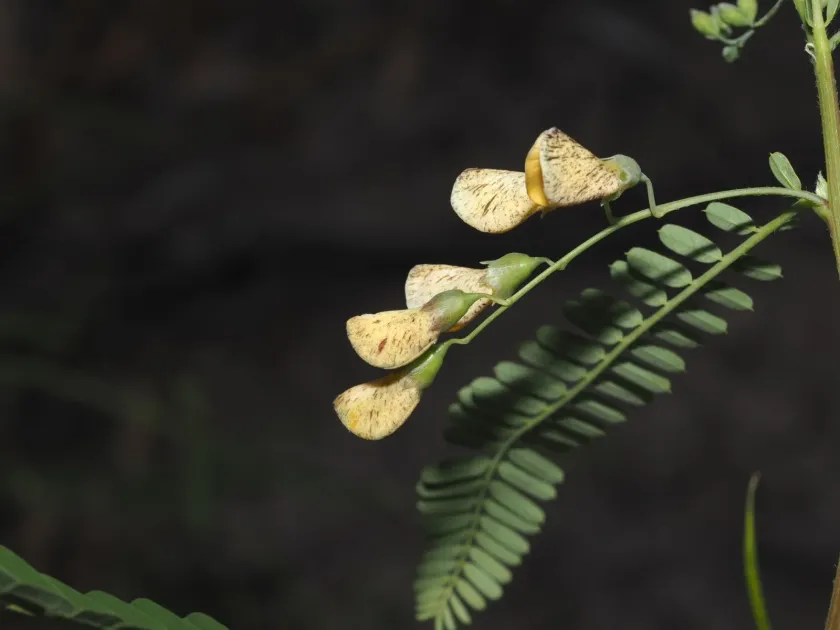
Description
Sowing dates
Sesbania cannabina is a heat-loving crop that requires warm soil conditions for optimal germination. Sowing should only begin when soil temperatures consistently stay above 18°C, typically in late spring or early summer in temperate regions.
The seeding rate varies depending on the purpose of the crop, typically ranging from 20 to 40 kg per hectare for standard field production. Seeds should be planted at a shallow depth of 2–4 cm to ensure rapid emergence and establishment.
Due to the hard seed coat, scarification is often recommended to break dormancy and increase overall germination rates. Pre-soaking seeds in water for several hours can also assist in achieving more uniform stand development across the field.
Row planting is standard practice, with spacings of 15–30 cm between rows, allowing for quick canopy closure. A dense canopy is highly effective at shading out weeds, which reduces the need for mechanical or chemical intervention during the growing season.
The crop demonstrates vigorous growth once established, often reaching a competitive height within weeks. Proper soil moisture at the time of sowing is crucial to guarantee that seedlings survive the critical first stage of development without stress.
Growing requirements
As a member of the Fabaceae family, Sesbania cannabina is a robust annual legume known for its exceptional adaptability to challenging environments. It thrives in tropical and subtropical climates where high temperatures and humidity prevail.
One of the most notable features of this crop is its remarkable tolerance to waterlogging. It is frequently employed in regions where other crops fail due to poor drainage, as it can thrive even when root systems are temporarily submerged in water.
The plant performs well in diverse soil types, including saline and alkaline soils, which makes it an excellent candidate for land reclamation projects. Its ability to thrive in degraded soils contributes significantly to restoring soil health and structure.
Sesbania cannabina requires full sun exposure to reach its maximum biomass production potential. While it can handle partial shade, growth rates and nitrogen-fixing efficiency are significantly higher when the plants have unobstructed access to solar radiation.
Although it is relatively drought-tolerant once fully mature, the crop responds positively to consistent moisture levels during the peak vegetative phase. Adequate levels of phosphorus in the soil are essential to stimulate healthy root nodules for effective nitrogen fixation.
Yield
Sesbania cannabina is highly valued for its rapid biomass accumulation, often yielding 30–50 tonnes of green matter per hectare in a single season. This high productivity makes it a premier choice for farmers looking for an efficient green manure source.
The nitrogen-fixing capabilities of this legume are substantial, significantly increasing the soil nitrogen profile after the green biomass is incorporated. This reduces the dependency on synthetic fertilizers for subsequent main crops in the rotation.
In addition to soil improvement, the crop serves as a source of nutritious forage. Its high protein content in young tissues makes it an excellent dietary supplement for ruminant livestock, provided it is harvested before the stems become too fibrous.
Seed yield can reach up to 2 tonnes per hectare under optimal conditions, allowing for sustainable seed production. Reliable seed production is vital for the continued use of this crop in large-scale agricultural operations and cover cropping systems.
The overall impact of Sesbania cannabina on the soil is a direct result of the large volume of organic matter returned to the earth. Regular cultivation of this crop leads to improved soil porosity and enhanced water-holding capacity over time.
Main diseases and pests
Sesbania cannabina possesses natural chemical defenses, including specific alkaloids, which provide a degree of protection against many generalist pests. However, during high-pressure cycles, it may still be susceptible to specific leaf-feeding insects.
Fungal diseases like leaf spots can occasionally occur, particularly in environments with poor air circulation and excessive humidity. Maintaining proper stand density and adequate soil drainage is the most effective management strategy to mitigate these risks.
Root rots are a potential threat when the soil remains too compacted or waterlogged for extended periods. Even though the crop is tolerant to moisture, extreme anaerobic soil conditions can hinder root development and encourage soil-borne pathogens.
Pest management is generally minimal, as the crop is designed for low-input systems. Monitoring for outbreaks of caterpillars or aphids during the seedling stage is recommended, though the plants' rapid growth usually allows them to outpace minor damage.
Effective preventive measures include using certified clean seeds and maintaining a diverse crop rotation. By preventing the buildup of host-specific pathogens in the soil, farmers can ensure the long-term success of Sesbania cannabina on their land.
Harvesting
For green manure purposes, the crop should be harvested during the early flowering stage, before pods start to develop. This timing ensures that the nitrogen content is at its peak and the tissue is soft enough to break down rapidly in the soil.
The biomass is typically incorporated into the top 10–15 cm of soil using heavy discs or rototillers. This process facilitates the release of nutrients, which become available to the subsequent crop within a relatively short decomposition window.
If harvested for seed, the plants are allowed to dry in the field until the pods turn brown and brittle. Harvesting must be timed correctly to prevent pod shattering, which can lead to significant seed loss if delays occur during peak maturity.
Once harvested, seeds should be cleaned and stored in cool, dry conditions to maintain their viability. Proper storage prevents moisture-induced degradation, ensuring high germination rates for future planting seasons.
Post-harvest residues contribute significantly to the improvement of soil structure. The deep taproot of the mature plant helps in breaking up soil compaction, allowing for better aeration and water penetration throughout the entire soil profile.