
Kennedia coccinea
Kennedia coccinea Vent.
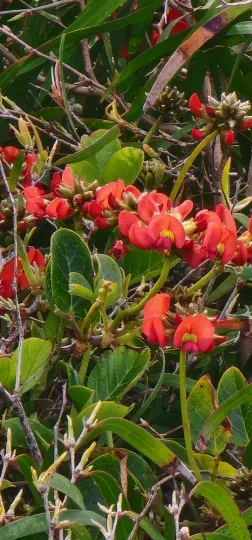
Description
Sowing dates
The seeds of Kennedia coccinea have a hard, water-impermeable coat that requires scarification before sowing. Soaking them in warm water for a few hours after nicking the seed coat significantly improves germination rates.
Sowing should be done in a well-draining seed-starting mix. The optimal temperature for germination is between 20°C and 22°C. Seeds are typically sown in early spring to allow the plant enough time to establish itself before the heat of summer.
Once seedlings have developed two sets of true leaves, they should be transplanted into individual pots. This careful handling prevents root disturbance, as members of the Fabaceae family often dislike having their roots tampered with.
When moving plants to their permanent location, choose a spot with adequate space for the vines to climb. Since it is a legume, the plant can benefit from soil microorganisms, so avoiding harsh chemicals in the potting mix is advised.
In greenhouse settings, continuous sowing is possible with supplementary lighting. This ensures a steady supply of flowering plants throughout the growing season.
Growing requirements
Kennedia coccinea thrives in well-draining, sandy or loamy soils. Good drainage is essential, as the plant is highly susceptible to root rot if left in waterlogged conditions, reflecting its natural habitat in Western Australia.
The plant requires full sun to partial shade. In its natural environment, it basks in sunlight, which is necessary for the production of its signature vivid red flowers. Shade-grown plants tend to become leggy and produce fewer blooms.
The climate should be mild; the species is not frost-tolerant and prefers temperatures between 18°C and 26°C. In colder climates, it is best grown in containers that can be moved indoors during the winter months.
Watering must be done carefully, allowing the top layer of soil to dry out between applications. During the winter dormant period, water usage should be drastically reduced to maintain the plant in a semi-dry state.
Providing a sturdy trellis or fence for the vine to climb is a fundamental requirement for its maintenance. Regular pruning after the flowering season keeps the plant tidy and encourages bushier growth and denser foliage.
Main diseases and pests
Spider mites are the most common pest, especially in dry and warm conditions. These pests can cause significant damage to the foliage, resulting in yellowing and stunted growth if not managed promptly.
Powdery mildew can occur if the plant is grown in areas with high humidity and poor air circulation. Proper spacing and ensuring a gentle breeze around the foliage are the best preventive measures against fungal infections.
Root rot, often caused by overwatering, remains the primary threat to the long-term health of the plant. Ensuring the growing medium is porous and the pots have adequate drainage holes is critical for success.
Aphids might cluster on the young, tender growth of the vine. These insects can be easily managed with a gentle blast of water or the application of insecticidal soap when infestations are detected early.
Nutrient deficiency, particularly of iron, can lead to leaf chlorosis. Using a balanced, slow-release fertilizer designed for legumes helps maintain plant vigor and enhances the intensity of the flowering cycle.