
Gueldenstaedtia stenophylla
Gueldenstaedtia stenophylla
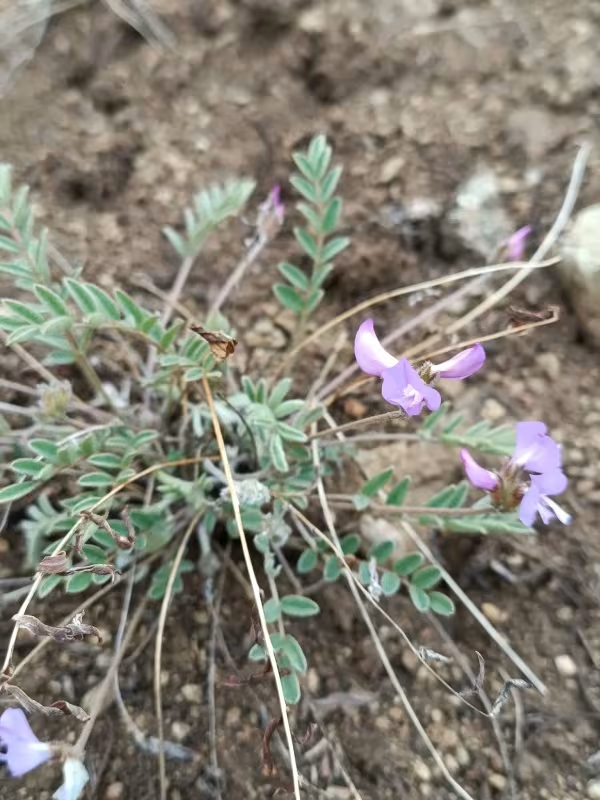
Description
Growing requirements
Gueldenstaedtia stenophylla is a perennial herbaceous plant belonging to the Fabaceae family. Known for its remarkable resilience, this species has evolved in demanding environments, making it a subject of interest for agricultural research focused on stabilizing and restoring poor-quality soils in steppe and mountain ecosystems.
Originating from East Asia, including regions across China, Mongolia, and parts of the Russian Far East, the plant is well-adapted to continental climates. It thrives in open, sunny locations with rocky or sandy substrates, demonstrating high drought tolerance and an ability to survive extreme thermal fluctuations.
Botanically, the species is defined by its deep-reaching taproot and narrow, pinnate leaves, which are morphological adaptations designed to conserve water and maximize nutrient uptake. These features allow the plant to maintain physiological activity in environments where water availability is a major limiting factor for most crops.
Soil requirements for Gueldenstaedtia stenophylla focus primarily on aeration and drainage. The plant prefers neutral to slightly alkaline soils and thrives in environments where it can form symbiotic relationships with rhizobia bacteria. This biological nitrogen fixation process makes it highly beneficial for improving soil nitrogen levels naturally.
Agricultural management requires careful attention during the establishment phase, as the plant grows relatively slowly. Once fully established, it requires minimal maintenance and can persist for many years, serving as a permanent ground cover that helps prevent soil erosion and contributes to the overall stability of the local ecosystem.
Main diseases and pests
The primary threats to the cultivation of Gueldenstaedtia stenophylla involve fungal pathogens that emerge when moisture levels in the root zone are poorly managed. Root rots represent a significant risk, particularly in heavy or compacted soils that lack sufficient oxygen for the healthy development of the plant's root system.
Insect pests such as weevils and aphids pose consistent challenges throughout the growing season. These pests can significantly reduce the photosynthetic capacity of the plants by damaging leaves and stems, which in turn weakens the plant’s vigor and makes it more susceptible to secondary environmental stresses.
Weed competition remains the most critical barrier during the seedling stage. Given its slow initial growth rate, the crop is easily outcompeted by fast-growing weeds that deprive it of sunlight, water, and essential nutrients. Effective weed control programs are necessary to ensure the survival of the seedlings.
Grazing animals can also cause damage if the browsing pressure is too high. Overgrazing prevents the plant from storing sufficient carbohydrates in its roots for overwintering, potentially leading to increased mortality during cold months and reduced growth performance in the following growing season.
Effective management strategies should focus on integrated pest and weed control. This includes proper site preparation to improve soil structure before sowing and monitoring the population density of potential insect pests. Ensuring adequate spacing between plants can also improve air circulation, reducing the risk of fungal outbreaks.