
Gueldenstaedtia multiflora
Gueldenstaedtia multiflora
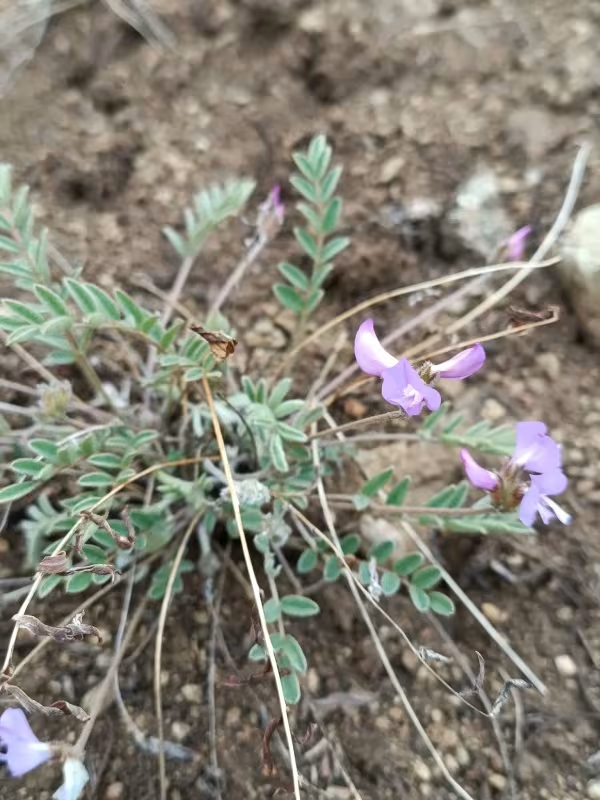
Description
Sowing dates
Gueldenstaedtia multiflora belongs to the Fabaceae family and is recognized as a hardy perennial herbaceous plant suitable for specific forage or soil-improvement applications.
Sowing should be performed during early spring when soil temperatures reach stable levels. The seeds have a hard seed coat, making mechanical scarification a standard necessity before planting.
Seeds are typically sown at a shallow depth of approximately 1-2 centimeters. Achieving uniform spacing is essential to minimize competition during the early establishment phase.
Initial growth is notably slow, requiring intensive weed control in the first few months to prevent shading and nutrient deprivation of the young seedlings.
Effective stand establishment relies on maintaining consistent soil moisture until the root system is fully anchored and capable of accessing deeper water resources.
Growing requirements
The plant originates from the steppe regions of East Asia. It is naturally adapted to climates characterized by distinct wet and dry seasons, showing excellent drought tolerance.
Well-drained soils are critical for the survival of this species. It performs best in loam or sandy loam textures with a neutral to slightly alkaline pH level.
High solar radiation is required for vigorous flowering and seed production. The plant is photophilous and does not perform well in shaded conditions or dense forest understories.
Soil fertility requirements are relatively low compared to intensive cash crops, as the plant benefits significantly from symbiotic nitrogen-fixing rhizobia.
The crop is adapted to temperate conditions. While it can withstand cold winters, it thrives best in environments where the summer temperatures remain moderate.
Main diseases and pests
Root rot represents the most significant threat to Gueldenstaedtia multiflora, primarily occurring in poorly drained or waterlogged soils.
Pests, particularly legume-specific insects like weevils, can affect biomass accumulation. Monitoring for early signs of infestation is vital for maintaining crop health.
Cultural practices such as crop rotation play a fundamental role in disease prevention, preventing the buildup of soil-borne pathogens and nematodes.
Ensuring adequate air circulation through appropriate row spacing helps reduce the severity of foliar fungal infections during humid spells.
Integrated Pest Management (IPM) strategies, including biological control, are recommended to protect the crop without disrupting the beneficial soil microbiota.