
Guibourtia coleosperma
Guibourtia coleosperma
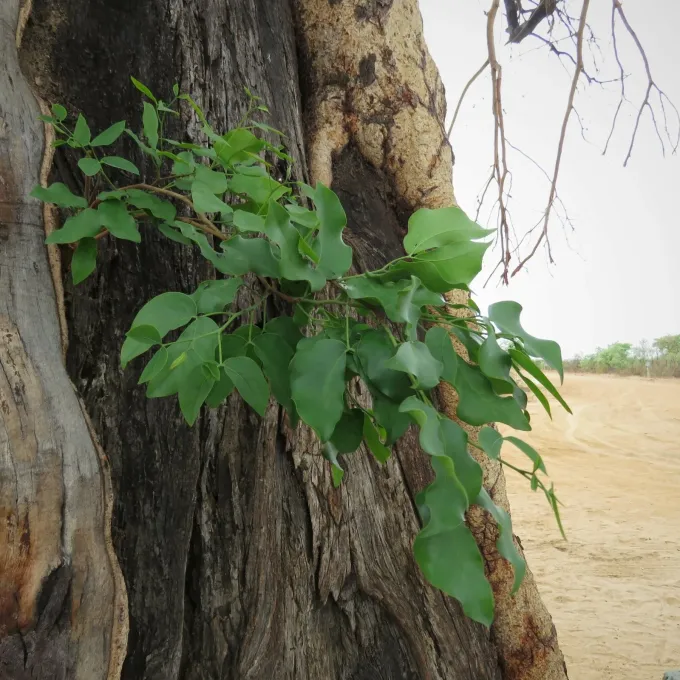
Description
Sowing dates
Guibourtia coleosperma is a notable member of the Fabaceae family, native to the Southern African woodland regions.
Propagation typically relies on seeds, which possess a hard coat requiring mechanical scarification to ensure uniform germination.
In nursery environments, sowing occurs at the beginning of the rainy season to capitalize on moisture for seedling establishment.
Seeds should be sown in well-draining sandy soil mixtures to simulate the natural habitat and prevent rot during the early growth phase.
Container-grown seedlings are preferred for reforestation projects as they show better survival rates compared to direct seeding in challenging environments.
Growing requirements
This species thrives in well-drained sandy soils and is well-adapted to the nutrient-poor substrates of the Kalahari ecosystem.
It exhibits remarkable drought tolerance, allowing it to withstand prolonged dry seasons typical of its natural savanna range.
Full solar exposure is essential for vigorous growth, as this tree species is highly intolerant to shading from taller canopy vegetation.
The ideal temperature range is tropical to subtropical, avoiding areas susceptible to severe frost which can cause significant dieback.
Root system development requires deep soil profiles to reach moisture reserves, which is critical for long-term survival in arid landscapes.
Yield
The primary economic output of Guibourtia coleosperma is its dense, high-quality timber known for its attractive reddish-brown color.
Yielding high-grade wood requires long-term management, often spanning several decades as the tree is slow-growing.
Secondary benefits include the harvest of edible arils from the seeds, which are consumed by local wildlife and sometimes harvested by humans.
Resin extraction from the trunk is a historical practice, providing non-timber products that support local artisanal activities.
Sustainable yield management emphasizes the importance of rotational harvesting to maintain the health and diversity of the forest ecosystem.
Main diseases and pests
Browsing by local fauna such as antelopes and elephants poses a significant threat to young saplings in their critical establishment phase.
Fungal pathogens associated with excessive moisture and poor drainage can lead to root decay in nursery-raised stocks.
Seed-boring insects frequently damage harvestable seeds, reducing the viability of germplasm collected for future plantings.
Anthropogenic pressure, specifically uncontrolled fire and over-harvesting, threatens the fragmentation of natural population habitats.
Competitor plant species, especially fast-growing invasive weeds, can stifle the growth of young trees during the first few years of plantation development.
Harvesting
Timber harvesting is conducted through selective logging, targeting mature individuals that have reached optimal wood density.
Modern forestry practices mandate careful extraction to protect the surrounding ecosystem and minimize soil compaction.
Initial processing of the logs, including stripping and debarking, is often performed in the field to optimize transport efficiency.
Proper seasoning or kiln-drying is crucial to stabilize the dense wood, preventing warping and checking before it is used for furniture.
The wood is highly valued in international markets for its durability, resistance to rot, and distinct aesthetic grain patterns.