
Cenostigma pluviosum
Cenostigma pluviosum
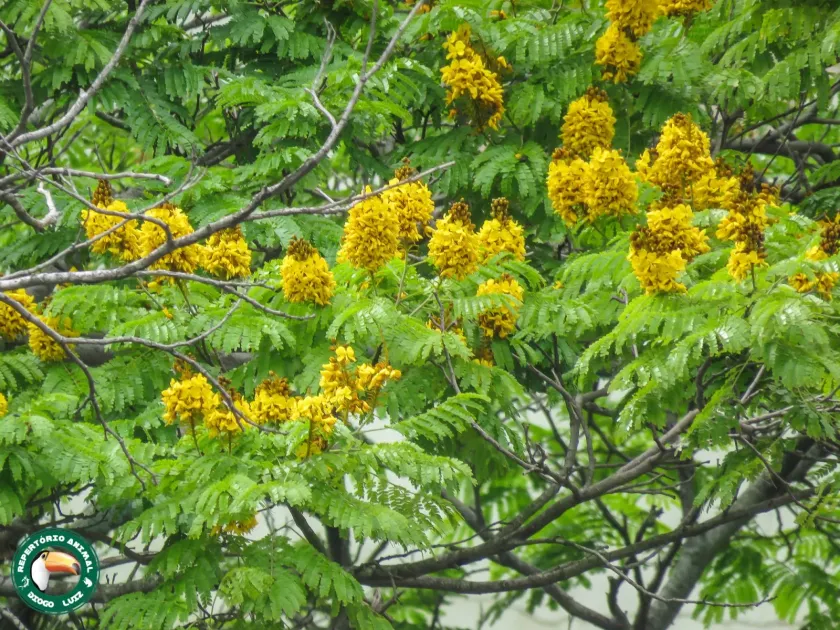
Description
Growing requirements
Cenostigma pluviosum is a prominent member of the Fabaceae (legume) family. Known for its rapid growth, it functions as a large, wide-canopy tree that provides significant ecological and aesthetic value.
The species is native to South America, particularly regions within Brazil. It thrives in tropical climates where annual cycles alternate between distinct rainy periods and drier phases, demonstrating high adaptability.
Successful cultivation requires soil that possesses excellent drainage properties. While the plant can tolerate various soil types, it is highly sensitive to waterlogging, which often leads to root rot issues.
The tree requires full sun exposure to maintain its structural integrity and achieve vigorous growth. In low-light environments, the canopy density decreases, and the plant becomes susceptible to spindly growth.
Temperature management is a primary constraint. As a tropical species, it requires consistently warm conditions throughout the year and is unable to survive frost, necessitating cultivation in controlled greenhouse environments in temperate regions.
Harvesting
The primary horticultural application of Cenostigma pluviosum is in urban and landscape design. It serves as an excellent shade tree and is widely used in city planning to mitigate the heat island effect.
Beyond aesthetics, the tree provides high-quality wood that is utilized in local artisanal woodcrafts and small-scale timber production, highlighting its versatility in land management applications.
As a legume, it plays a vital role in soil health improvement through nitrogen fixation. This natural process enhances the nutrient profile of the surrounding earth, benefitting the surrounding ecosystem.
Propagation is primarily performed through seeds. The seeds are typically harvested from mature, dry pods; scarification is often employed to break dormancy and ensure a high germination rate before planting.
Maintenance involves routine pruning to encourage desired growth patterns and structural stability. Removing dead wood and managing density are key to sustaining the health and longevity of these trees.