
Anagyris latifolia
Anagyris latifolia
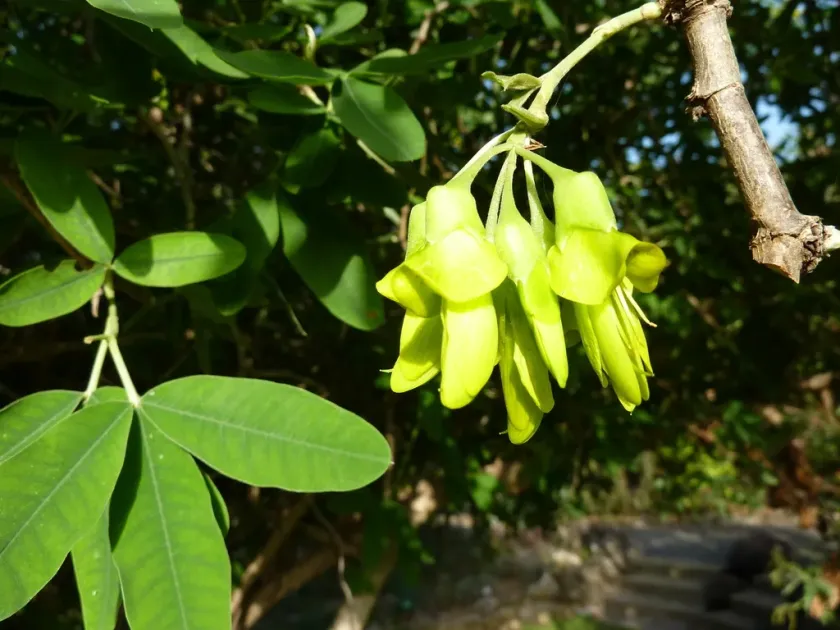
Description
Sowing dates
Propagation of Anagyris latifolia is typically achieved through seed sowing, which requires careful pre-treatment to ensure a successful germination rate.
The seeds possess a hard coat, making mechanical or chemical scarification an essential step before planting them into the nursery substrate.
Sowing should take place in late winter or early spring to take advantage of the natural light cycles that trigger the growth of this Mediterranean-origin species.
Using well-drained, porous containers allows for better control over moisture levels, which is critical during the initial germination phase.
Transplanting into the permanent garden setting should be handled with care to avoid root ball disruption, as the plant is sensitive to transplant shock.
Growing requirements
As a member of the Fabaceae family, this species is well-adapted to nutrient-poor soils and demonstrates significant resilience in diverse environments.
The plant thrives in full sun exposure and requires a location with excellent drainage to prevent the accumulation of moisture near the root collar.
Soil pH should ideally be neutral or slightly alkaline, mimicking the volcanic or calcareous soils typical of the Canary Islands, its natural habitat.
Climate tolerance is restricted to regions with mild winters, as the plant is not frost-hardy and can suffer severe damage during prolonged freezing temperatures.
While mature plants exhibit high drought tolerance, supplementary watering is beneficial during the first years of establishment to promote deep rooting.
Main diseases and pests
The most significant threat to the health of Anagyris latifolia is root rot, which occurs primarily due to poor drainage and waterlogged conditions.
Pest pressure from aphids and spider mites can become an issue, particularly if the plant is grown in restricted or poorly ventilated greenhouse spaces.
Fungal pathogens may colonize the foliage during periods of high humidity and low air movement, necessitating the removal of affected branches.
Young plants are particularly vulnerable to weed competition, which can shade out the seedlings and deplete necessary soil nutrients during early growth.
Maintaining a balanced ecosystem around the plant is the best preventive measure against infestations and systemic plant diseases.
Harvesting
Harvesting for the purpose of seed collection is conducted once the legume pods have turned dark and begin to dry naturally on the branches.
It is important to time the harvest correctly before the pods naturally dehisce and disperse their seeds on the ground, ensuring maximum yield recovery.
Manual collection of pods is the standard method, as it prevents damage to the delicate flowering branches of the shrub.
After collection, the seeds should be extracted from the pods and stored in a cool, dry place to maintain their viability for the next planting season.
Proper cleaning and sorting of the seeds are recommended to remove debris and ensure high-quality propagation material for future production.