
Hyssopleaf sandmat
Euphorbia hyssopifolia
Description
Growing requirements
Hyssopleaf sandmat (Euphorbia hyssopifolia) is an annual herbaceous plant belonging to the Euphorbiaceae family. In agricultural settings, it is often recognized as a persistent weed that competes aggressively with commercial crops for nutrients and sunlight.
The plant is native to tropical and subtropical regions of the Americas. Its current range is vast, spanning across North, Central, and South America, where it thrives in disturbed habitats and cultivated fields due to its high adaptability.
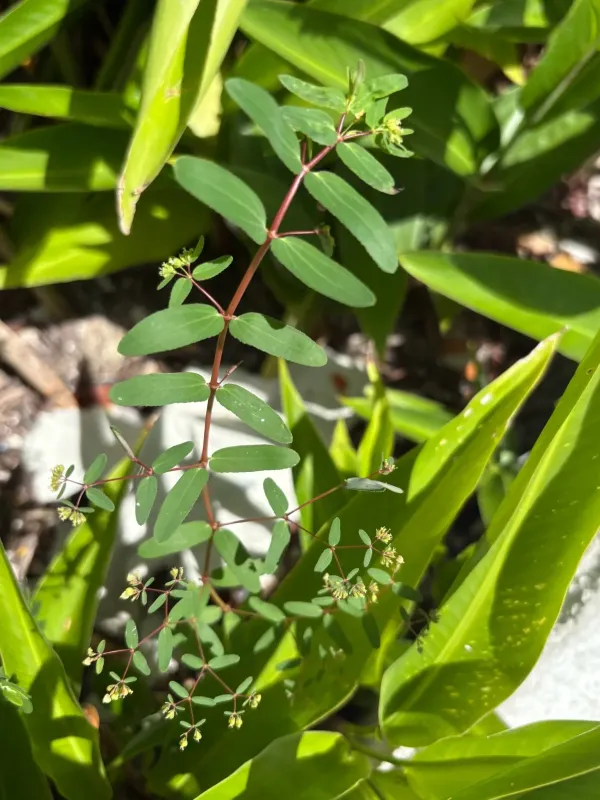
Morphologically, it is characterized by branched stems and narrow, hyssop-like leaves. It exhibits a prostrate or semi-erect growth habit and produces small, inconspicuous flowers that develop into capsules containing numerous seeds.
The species prefers sunny conditions and well-drained soils. It is highly drought-tolerant, which allows it to persist in areas where other species might struggle. This resilience makes it a challenging target for standard weed control programs.
From a хозяйственное perspective, Euphorbia hyssopifolia is rarely beneficial. Its primary impact is negative, as it can reduce crop yields and interfere with mechanical harvesting operations if left uncontrolled in fields.
Main diseases and pests
The primary threats posed by this weed include its ability to outcompete crops for limited resources and its potential to harbor plant pathogens. It is known to host various fungi that can spread to cultivated crops.
Pest pressure on this weed is relatively low due to the toxic milky latex found in its stems and leaves, which acts as a deterrent to many herbivores. However, specific insects can still utilize the plant for shelter and breeding.
Management usually involves a combination of pre-emergent and post-emergent herbicides. Because the plant produces seeds continuously throughout the season, repeated applications are often necessary to keep populations under control.
Cultural control methods include maintaining a dense crop canopy to limit light availability for the weeds. Proper soil preparation and timely cultivation between rows are also standard practices to suppress the growth of the sandmat.
Strict monitoring is recommended for farmers in regions where the species is invasive. Preventing seed set is the most critical step in long-term management, as the soil seed bank can persist for several years if not addressed.