
Ipecac spurge
Euphorbia ipecacuanhae
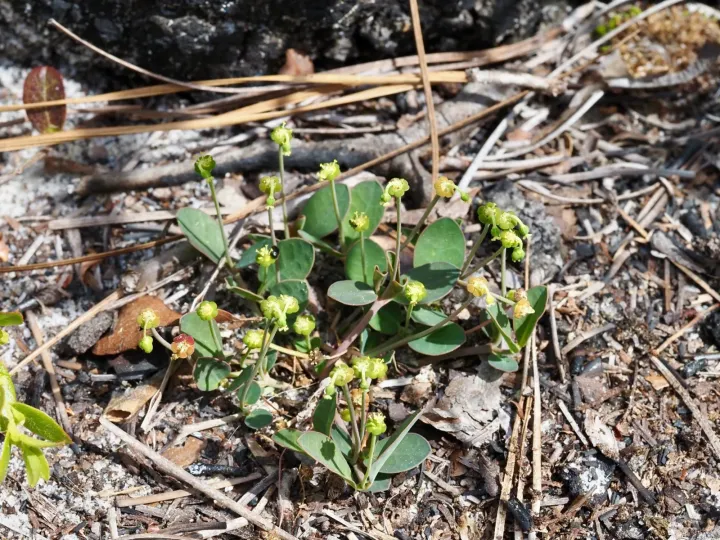
Description
Growing requirements
Ipecac spurge (Euphorbia ipecacuanhae) is a herbaceous perennial belonging to the Euphorbiaceae family. Native to the eastern United States, this species is well-adapted to sandy and well-drained soils, reflecting its evolutionary origin in coastal plain habitats.
The plant features a prominent taproot system that enables it to thrive in nutrient-poor substrates by reaching deep water reserves. Its growth habit is typically low and compact, which is a common adaptation to exposed and windy environments.
Successful cultivation of this species necessitates full sun exposure and excellent soil drainage. Heavy or clay-based soils are generally unsuitable as they increase the risk of root rot and inhibit the development of the taproot.
Temperature requirements for Ipecac spurge involve a cycle of warm growing seasons followed by a period of dormancy. The plant is relatively hardy and can adapt to variations in moisture, provided that the growing medium remains aerated and loose.
In terms of agricultural utility, this plant is primarily studied for its secondary metabolites contained within its milky latex. It is rarely grown as a mass commodity but holds value in specialized horticultural and botanical research settings.
Main diseases and pests
The most significant threat to Ipecac spurge is fungal infection affecting the taproot, primarily caused by waterlogged soil conditions. Proper site selection and drainage management are essential to prevent rot-related mortality.
While the caustic latex acts as a natural deterrent against many generalist insect herbivores, aphids can occasionally pose a threat to young foliage during early stages of growth. Monitoring these populations is advised during the peak growing season.
Foliar diseases, such as rusts or mildews, may develop in environments with high humidity and poor air circulation. Ensuring adequate spacing between plants significantly mitigates the spread of these pathogens.
Weed control is mandatory, as Ipecac spurge has a slow establishment rate and cannot effectively compete with aggressive ground cover weeds. Regular manual weeding is the most reliable method to ensure the survival of young sprouts.
Vertebrate pests, such as small rodents, may target the taproots during winter months. Protecting the planting area with proper fencing or deterrents can minimize potential damage from these animals during the dormant phase.