
Jatropha podagrica
Jatropha podagrica Hook.
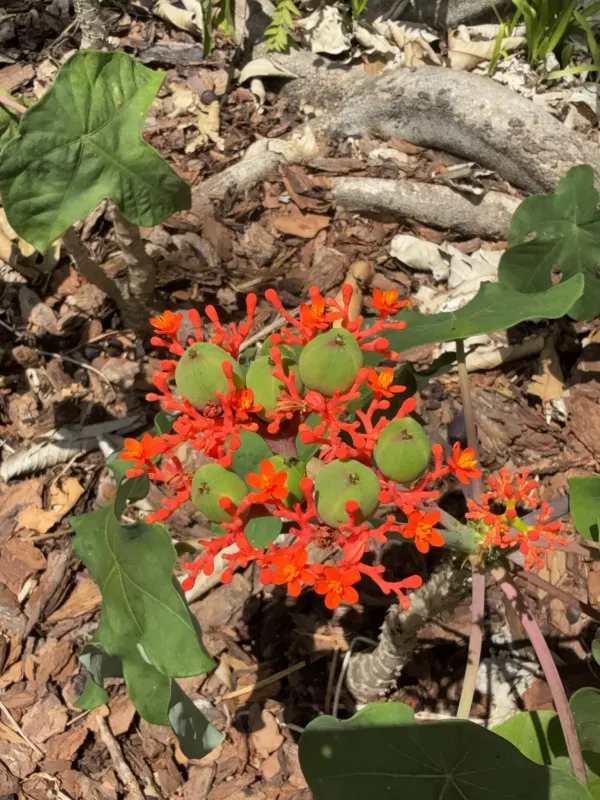
Description
Sowing dates
Jatropha podagrica, commonly known as the gouty jatropha or belly plant, belongs to the Euphorbiaceae family. It is typically propagated by seeds during the spring season, ensuring a strong start for the plant before the dormant winter phase.
The seeds require a well-draining, sandy soil mixture for successful germination. Keeping the substrate temperature around +22...+25°C is critical, and maintaining consistent but not excessive moisture is necessary for the seeds to sprout effectively.
Vegetative propagation via cuttings is also possible but requires specialized care. Cuttings must be allowed to callus over for several days after cutting to prevent rot, as the succulent stems are susceptible to moisture-induced decay.
After successful establishment, young plants require potting in containers that facilitate root development while preventing waterlogging. Regular repotting is essential during the plant's early growth years to support the expanding caudex.
Consistent agrotechnical management involves balanced nutrient supply. Using low-nitrogen, succulent-specific fertilizers during the active growing season helps maintain the plant's structural integrity and decorative appeal.
Growing requirements
Originating from tropical environments, Jatropha podagrica thrives in high-light conditions. Providing direct or bright, indirect sunlight is vital for the development of its signature thickened stem and vibrant red flowers.
Temperature management is crucial, with an ideal range of +20...+28°C. The plant should be protected from temperatures below +15°C, as the combination of cold and humidity quickly leads to physiological stress and pathogen outbreaks.
The soil structure must be highly porous. A mixture of gravel, perlite, and high-quality potting mix is recommended to ensure rapid drainage. Compact or clay-heavy soils are unsuitable as they trap excess water, endangering the root system.
Watering patterns should mirror the plant's cycle: generous watering during the summer growth phase and minimal or no water during the winter dormancy period. Ensuring the substrate dries out completely in winter is essential for survival.
Good air circulation is necessary to prevent fungal infections, especially in enclosed environments like greenhouses. Consistent airflow helps regulate transpiration and keeps the canopy healthy and pest-free.
Main diseases and pests
Root rot remains the most significant threat to Jatropha podagrica, usually resulting from overwatering or inadequate drainage. Early detection is possible by observing the firmness of the base and the color of the caudex.
Pests like spider mites are common in low-humidity environments. Regular inspection of the leaf undersides is recommended, and if an infestation is detected, systemic acaricides should be applied to manage the population effectively.
Mealybugs can also infest the plant, hiding in the junctions of stems and leaves. Using cotton swabs soaked in alcohol or appropriate insecticides provides effective control without causing damage to the succulent tissues.
Physiological disorders, such as premature leaf drop or distorted growth, often indicate improper light levels or severe temperature fluctuations. Positioning the plant in a stable environment is key to avoiding these issues.
While the toxicity of the plant acts as a natural deterrent for many herbivores, it requires cautious handling. Always wear protective gloves when pruning or repotting to avoid contact with the caustic latex sap.