
Jamaican poinsettia
Euphorbia punicea
Description
Growing requirements
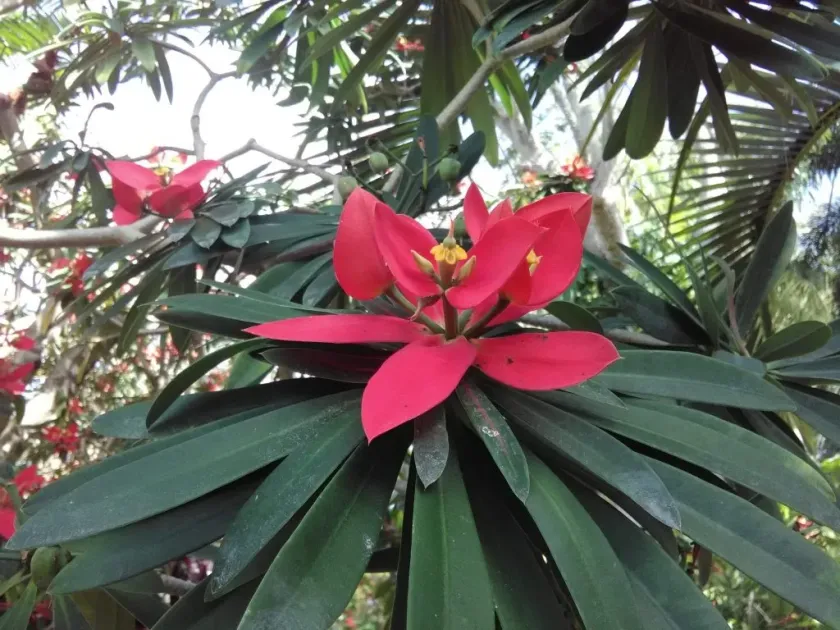
The Jamaican poinsettia (Euphorbia punicea) is a perennial shrub belonging to the Euphorbiaceae family. Native to the island of Jamaica, it is highly valued for its striking appearance and bright red bracts that surround its flowers.
Botanically, this species is characterized by its woody stems and long, leathery, lance-shaped leaves. In optimal conditions, it grows as a tall, upright shrub, making it a prominent feature in tropical landscaping and botanical garden collections.
The plant thrives in well-draining soil with a pH that is slightly acidic to neutral. It is essential to avoid waterlogged conditions, as the root system of Euphorbia punicea is particularly susceptible to suffocation and rot if kept consistently wet.
Climate requirements for this plant are strictly tropical. It demands full sun exposure to maintain its vibrant color and structural integrity. Temperatures should ideally remain consistently above 20 degrees Celsius, as the plant does not tolerate frost or chilling.
Maintenance involves regular monitoring of light levels and air circulation. In cultivation, it requires ample space to develop its branches properly, as crowding can lead to leaf drop and decreased photosynthetic efficiency.
Main diseases and pests
Common pests affecting Euphorbia punicea include mealybugs and spider mites, which typically thrive in warm, dry environments. Regular inspection of the leaf undersides is recommended to catch infestations in their early stages.
Fungal diseases, specifically root rot, are the most significant threat to the plant's health. This is usually caused by excessive watering or poor drainage, which creates an anaerobic environment favored by pathogenic fungi.
Leaf spot diseases may occasionally appear, usually triggered by environmental stress or high humidity around the foliage. Removing infected leaves and improving air movement around the plant is a critical management strategy.
The plant produces a milky latex sap that is toxic and can cause skin irritation. When performing pruning or harvesting operations, it is necessary to use protective gear to prevent direct contact with the sap, which can also harbor bacteria if it drips onto open wounds on the plant.
Nutrient deficiencies, particularly involving micronutrients like magnesium or iron, can cause chlorosis. Periodic soil analysis and the application of balanced, slow-release fertilizers can help maintain the plant's vigor and resistance to biotic stressors.