
Cartagena cassava
Manihot carthaginensis
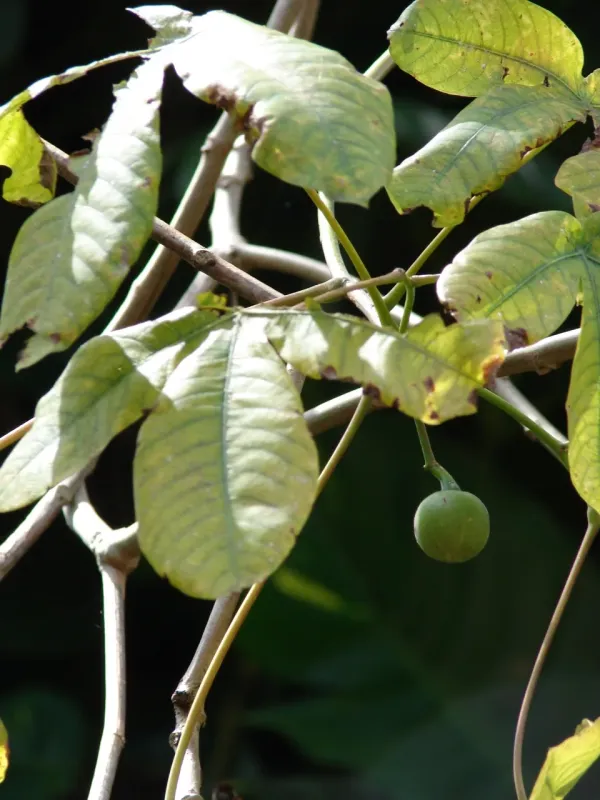
Description
Sowing dates
Cartagena cassava, scientifically known as Manihot carthaginensis, belongs to the Euphorbiaceae family. This perennial shrub is primarily propagated vegetatively through stem cuttings taken from mature, woody branches.
The optimal planting time coincides with the onset of the rainy season, which provides the necessary moisture for the cuttings to establish their root systems effectively. In stable tropical regions, planting can occur once temperatures are consistently warm.
Cuttings should be planted approximately 10–15 centimeters deep, ensuring they are placed right-side up. A spacing of about 1 meter between rows is recommended to provide adequate airflow and sunlight penetration for healthy growth.
As a light-loving plant, cassava performs best in open areas. Initial weeding is crucial during the first two months of development to ensure the young plants are not outcompeted by invasive vegetation.
While the plant is hardy and can survive in nutrient-poor soils, applying organic mulch around the base of the plant can significantly boost early growth rates and soil moisture retention.
Growing requirements
Cartagena cassava thrives in well-drained, sandy loam soils. It is highly intolerant of waterlogged conditions, which can lead to rapid root rot and crop failure, making proper soil drainage a top priority.
The ideal temperature range for growth is between 25°C and 30°C. The plant is very sensitive to cold, and even minor frost exposure can kill the foliage and severely damage the root development process.
Though established plants have a degree of drought tolerance, consistent rainfall throughout the growing season is necessary to produce high-quality, large tubers. Adequate light intensity is essential for maximizing photosynthesis.
The crop is highly adapted to tropical climates with high humidity levels. In arid areas where irrigation is possible, supplementary water during the tuber-bulking phase will improve yield outcomes.
Heavy clay soils should be avoided, as they restrict root expansion and make the mechanical harvesting process difficult, potentially leading to breakage of the tubers.
Main diseases and pests
Spider mites and mealybugs are the most common pests that affect cassava crops. These insects feed on the plant's sap, which can cause leaf yellowing, reduced photosynthetic ability, and stunted overall growth.
Fungal diseases, including anthracnose and various leaf spots, are prevalent in high-humidity conditions. Maintaining clean, well-ventilated planting rows is the most effective preventive measure against these pathogens.
Root rot, often caused by Phytophthora species under conditions of excessive moisture, represents the most significant biological threat to the crop. Affected plants must be removed and destroyed immediately.
Vector-borne viral infections, which manifest as mosaic patterns on the leaves, can reduce harvest quality. Monitoring insect populations and using virus-free cuttings are essential management strategies.
- Regular inspection of foliage for early signs of pests.
- Crop rotation to break pest and disease cycles.
- Selecting resistant clones for local cultivation.
Harvesting
The typical maturation period for Cartagena cassava ranges from 8 to 12 months. Harvesting is initiated when the foliage begins to show signs of senescence, such as yellowing and drying, indicating full starch accumulation.
Tubers are carefully lifted from the soil to avoid wounding. Any damage to the skin during harvesting significantly shortens the shelf life of the root, leading to rapid microbial decay within a few days.
Post-harvest management involves cleaning the roots and either immediate processing or storage in controlled environments. In rural practice, tubers are often sun-dried to produce long-lasting flour.
The crop serves as a vital source of energy and is widely used for industrial starch production. Properly stored processed products can maintain their nutritional value for extended periods.
Under good management conditions, the yield for this species is comparable to other cassava varieties, typically ranging between 10 and 20 tons per hectare depending on soil fertility and climate.