
Chrozophora plicata
Chrozophora plicata (Vahl) A. Juss. ex Spreng.
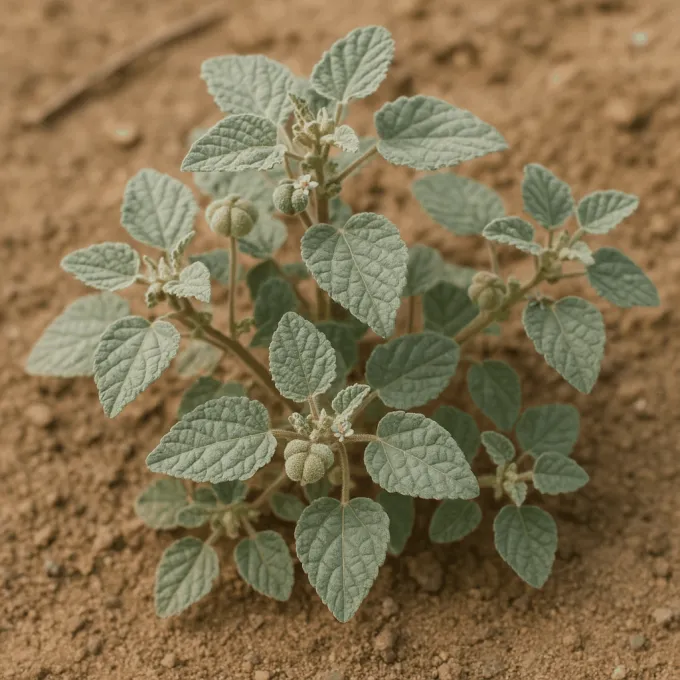
Description
Sowing dates
Chrozophora plicata is an annual herbaceous plant belonging to the Euphorbiaceae family. It is recognized primarily as a potential industrial crop, historically significant for the production of natural blue dyes and as a source of vegetable oil from its seeds.
The plant originates from the arid regions of North Africa, the Middle East, and parts of South Asia. It is naturally adapted to survive in harsh, sun-drenched environments with limited water availability, making it a robust candidate for hot-climate agriculture.
Botanically, the plant is characterized by a dense covering of stellate hairs across its stems and leaves, giving it a distinct grayish-green appearance. This specialized indumentum serves as a protective mechanism, reducing water loss through transpiration.
The sowing season begins when the soil temperature consistently reaches 18-20 degrees Celsius. Early sowing in cold soil can lead to poor germination and an increased risk of seedling blight, therefore timing should align with the stabilization of spring weather.
Cultivation requires a wide-row planting strategy to accommodate the plant's spreading growth habit. Adequate spacing between rows, typically 50 to 60 centimeters, ensures sufficient aeration and simplifies mechanical weeding, which is vital during the initial growth phase.
Growing requirements
This species is highly demanding in terms of sunlight exposure. It thrives only in full sun conditions; any form of shading significantly hinders its development, reduces biomass accumulation, and negatively impacts the concentration of pigments in its tissues.
Chrozophora plicata prefers light, sandy, or loamy soils with good drainage. It is highly sensitive to waterlogging, as excessive soil moisture promotes root rot. Neutral to slightly alkaline soil pH levels are optimal for healthy development.
While the plant is exceptionally drought-tolerant once established, it requires moderate soil moisture during the initial establishment phase. Once the plant reaches its vegetative maturity, it can thrive in environments where water is scarce.
Temperature is a key driver for the plant's metabolism. It flourishes in temperatures between 25 and 35 degrees Celsius. Being a thermophilic species, it cannot withstand freezing temperatures, necessitating a frost-free growing season for successful production.
Fertilization should be balanced, prioritizing potassium and phosphorus to support seed formation and root health. Excessive nitrogen applications are discouraged, as they tend to promote excessive vegetative growth at the expense of oil and pigment quality.
Yield
The primary economic value of Chrozophora plicata lies in its use as a natural pigment source. The plant's sap yields a substance known as turnsole, which has been traditionally utilized to create deep blue and purple dyes for textiles and food coloring.
Additionally, the seeds are rich in fatty oils, which possess industrial utility. These oils can be utilized in the production of varnishes, paints, and soaps, representing an alternative income stream for farmers engaged in this specialty crop.
Yield metrics for biomass and seeds are heavily dependent on cumulative solar radiation. Under optimal management in hot regions, the crop can provide consistent yields that meet the demands of niche organic and specialty chemical markets.
Harvesting follows a structured approach, starting with leaf collection during the peak of the vegetative stage. Seed harvest is delayed until the fruit capsules demonstrate full maturity, characterized by a change in texture and color.
Post-harvest processing requires rapid handling to ensure product quality. Drying must be performed in shaded, well-ventilated conditions to prevent the oxidation of pigments by ultraviolet light, which can degrade the value of the final dye product.
Main diseases and pests
The most significant threat to this crop is fungal infection, specifically root rot caused by poor soil drainage. Maintaining proper irrigation practices and crop rotation schedules is essential to mitigating this risk in commercial fields.
Insect pests, primarily aphids and spider mites, can cause substantial damage during dry, hot spells. These pests sap the plant's nutrients and can introduce viral pathogens, leading to leaf deformation and stunted growth.
Weed management is critical during the first few weeks of growth when the plant is establishing itself. Competition from aggressive annual weeds can significantly reduce the potential yield and complicate the harvest process later in the season.
Integrated Pest Management (IPM) is the recommended approach for protecting the crop. This involves frequent field scouting, encouraging natural predators, and avoiding broad-spectrum synthetic pesticides that could compromise the purity of the harvested raw materials.
In cases of severe infestation, targeted biological controls are preferred. Keeping the field margins clean and ensuring healthy plant vigor through balanced nutrition are the best preventative measures against pest outbreaks.
Harvesting
Harvesting should occur when the fruits reach physiological maturity and begin to change color to a darker, more brownish hue. Monitoring the crop is essential to prevent seed shattering, which occurs naturally as the capsules dry out.
Mechanical harvesting equipment must be adjusted to minimize damage to the delicate parts of the plant. If the intended product is the dye, the biomass must be moved to the processing facility immediately to prevent fermentation or moisture-related spoilage.
Drying is performed in controlled environments where temperatures remain below 40 degrees Celsius. Excessive heat or direct sunlight can destroy the heat-sensitive compounds responsible for the dye's color, significantly impacting the product's marketability.
Seeds are separated from the biomass, cleaned of debris, and graded for size. High-quality seeds exhibit a uniform appearance and a smooth, glossy coat, indicating good oil content and proper maturation during the growing cycle.
Final storage involves keeping the processed material in moisture-proof containers in a cool, dark room. This storage protocol maintains the chemical stability of the pigments and the oxidative stability of the seed oils until the final sale.