
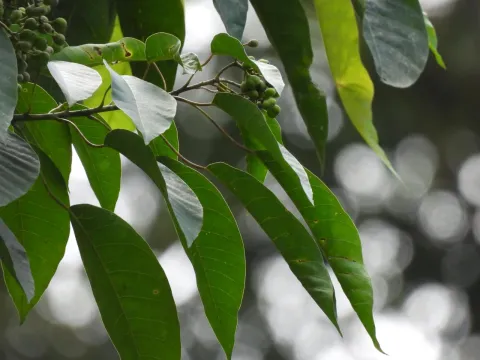
Balakata
Balakata
Balakata is a genus of trees and shrubs belonging to the Euphorbiaceae family. These plants are native to the tropical regions of Southeast Asia, where they thrive in diverse forested environments.
What the section contains


Balakata
The distribution range includes countries such as Thailand, Vietnam, and parts of the Malay Archipelago. These regions provide the necessary warm and humid conditions required for the development of these plants.
To cultivate Balakata, it is essential to provide a climate that closely mimics its natural tropical habitat. This involves maintaining consistently high temperatures and preventing any exposure to frost or prolonged chilly winds.
Soil requirements for Balakata include well-draining, nutrient-rich substrates. While the plant appreciates regular moisture, it is sensitive to waterlogged conditions, which can lead to root damage and poor physiological development.
The economic value of this genus lies in its potential for timber production in regional forestry and its role in tropical landscaping where environmental conditions support its long-term growth.
Like many species within the Euphorbiaceae family, Balakata is susceptible to various fungal pathogens that flourish in humid tropical environments, often manifesting as leaf spots or stem blights.
Insect pests such as scale insects and spider mites are known to colonize the foliage, potentially reducing the photosynthetic capacity of the plant if infestations are left unmanaged.
Root rots remain a significant threat, especially in nurseries or plantation settings where soil drainage is not properly managed, creating ideal conditions for soil-borne pathogens.
The presence of latex (milky sap) in the tissues provides a degree of chemical defense, but it does not fully prevent specialized insects from feeding on the plant's softer tissues.
Integrated pest management, including pruning affected parts and ensuring adequate air circulation within the canopy, is highly recommended to maintain the health and vigor of the plants.