
Austrian spurge
Euphorbia austriaca
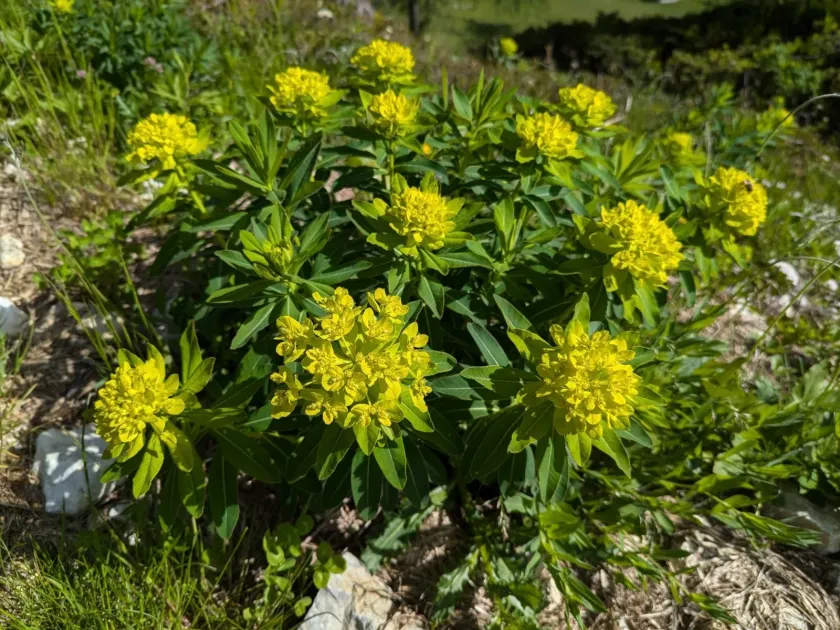
Description
Growing requirements
Austrian spurge (Euphorbia austriaca) is a perennial herbaceous plant from the Euphorbiaceae family. It is native to Central and Eastern Europe, typically found in temperate forest edges, moist meadows, and various open habitats where soil nutrient levels are moderate.
The plant thrives in loamy or sandy-loam soils that offer good drainage. It is not tolerant of waterlogged environments, preferring sites where the water table is stable and the soil structure is friable, allowing for deep root penetration.
Botanically, it is distinguished by a strong, persistent rootstock that enables it to survive overwintering and regrow vigorously in the spring. The leaves are typically alternate, often sessile, and the stem produces a distinct, toxic latex when damaged.
Regarding climate, this species prefers cool to moderate temperature regimes. It is highly resilient to early spring frosts, which gives it a competitive edge over many annual species during the early part of the growing season.
Light requirements are flexible, ranging from full sun to partial shade. However, in agricultural settings, its competitive nature is most pronounced in high-light environments where it can quickly establish dense colonies.
Main diseases and pests
Austrian spurge is susceptible to specific rust fungi that attack the foliage, which can potentially suppress local populations in natural ecosystems. These fungal pathogens often target the leaves and stems during high-humidity periods.
Various insect pests, including aphids and leaf-eating beetles, may affect the plant, but the presence of complex diterpenes in the latex acts as a strong chemical deterrent, limiting the impact of generalist herbivores.
In agriculture, it is classified as a troublesome weed. It competes with crops for soil moisture and nitrogen, and its deep-seated rhizomes make it extremely difficult to eradicate through simple mechanical tillage or harrowing.
Management strategies often involve the use of herbicides targeting the root system. Effective control is best achieved when the plant is at the vegetative stage before flowering, ensuring that the translocation of systemic chemicals reaches the rhizome buds.
Integrated weed management remains the most sustainable approach, combining chemical control with mechanical measures like deep plowing and crop rotation to exhaust the plant's food reserves stored in the roots.