
Balsam Spurge
Euphorbia balsamifera
Description
Sowing dates
Propagating Balsam Spurge is most efficiently achieved through stem cuttings, as seed germination in controlled environments is notoriously low and irregular. Selecting healthy, woody stems is the first step toward successful plantation establishment.
Once cuttings are harvested, they must be air-dried for several days in a shaded, ventilated area. This allows the cut end to callous over, which is essential to prevent internal rot caused by the thick, milky latex escaping from the plant tissues.
The substrate for propagation should be extremely well-draining, consisting primarily of coarse sand, perlite, and volcanic ash. Any moisture retention in the rooting medium can lead to the immediate failure of the cuttings.
The optimal planting season is during the peak of warm, sunny months, which ensures rapid root initiation. During the first stages of growth, the young plants should be kept away from excessive humidity to encourage strong, resilient root development.
In large-scale nursery operations, mist-free systems are preferred to maintain the health of the plants. Slow growth rates mean that space management and weed control are vital components of the early production cycle for this species.
Growing requirements
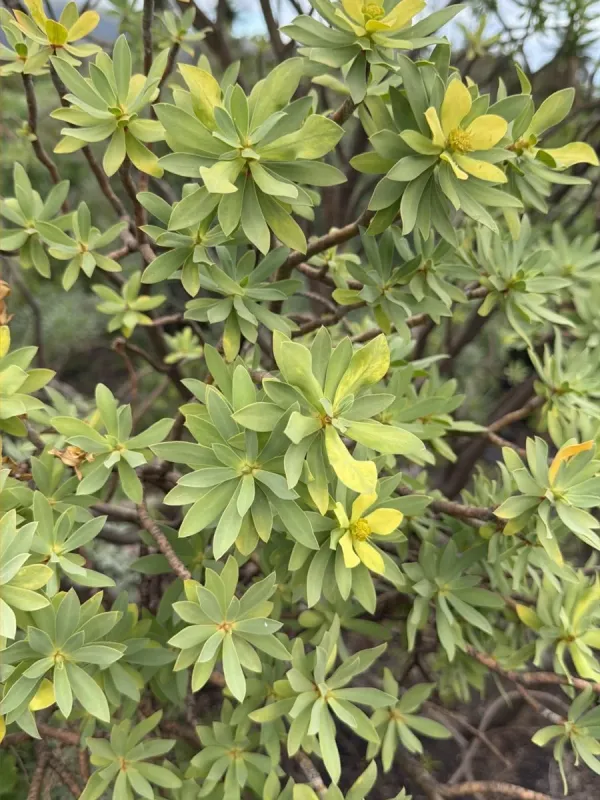
Balsam Spurge (Euphorbia balsamifera) is a prominent member of the Euphorbiaceae family, evolved specifically for arid climates. It functions as a succulent shrub, storing significant amounts of moisture within its stems to survive prolonged droughts.
The soil requirements are strict: the medium must be lean, sandy, or stony with high permeability. In native environments like the Canary Islands or Northern Africa, the plant thrives in volcanic soils where water drains away almost instantly.
This crop requires full sun exposure throughout the entire day. Any deficiency in light will cause the plant to etiolate, losing its compact, protective architecture and making it more susceptible to environmental stressors and fungal diseases.
Temperature regulation is crucial, as the plant cannot tolerate freezing temperatures. While it excels in heat, it prefers moderate daily fluctuations rather than extreme, prolonged heat stress that might inhibit metabolic activities during the hottest days.
Watering protocols must be kept to an absolute minimum. In agriculture, irrigation should only be applied during the most severe drought periods, and even then, only at the base of the plant to avoid wetting the stem or foliage.
Yield
The primary agricultural interest in Balsam Spurge lies in its production of thick, fragrant latex. Historically used as a natural adhesive or gum, the resin is collected through precise, shallow incisions made in the younger bark of the stems.
The yield of this substance is directly correlated with the health and maturity of the shrub. Harvesting must be performed during dry, calm weather to ensure the quality of the resin and to protect the plant from infection via the incision points.
Beyond the resin, the plant is valued for land reclamation. Its extensive root system prevents soil erosion on hillsides and degraded landscapes, acting as a natural stabilizer in regions where other crops fail to survive.
Although currently not a mainstream industrial crop, there is ongoing research into the pharmacological properties of the Euphorbia balsamifera sap. This could potentially increase its economic value in the medicinal industry.
Productivity is also measured by the plant's long lifespan. A well-established stand of Balsam Spurge can provide biomass and ecosystem services for many decades with minimal human input, making it a sustainable choice for arid-land farming.
Main diseases and pests
Fungal pathogens such as Phytophthora and Fusarium represent the most significant threat to Balsam Spurge populations. These pathogens proliferate rapidly if the root zone remains damp, especially in poorly aerated or heavy soil types.
Insect pests, including mealybugs and spider mites, often target the plant's growing tips, particularly in glasshouse or nursery conditions. Their presence weakens the plant and facilitates the entry of secondary pathogens into the sap-rich tissues.
Root systems are also susceptible to underground damage from small mammals or insects in desert environments, which can create entry points for soil-borne fungi. Maintaining a clean and sterile environment during planting is the primary line of defense.
Chemical control options are limited due to the plant's use in medicinal and traditional applications. Integrated Pest Management (IPM) techniques, focusing on environmental control and the removal of diseased sections, are preferred over synthetic pesticides.
Strict hygiene protocols, such as disinfecting all pruning tools after every use, are mandatory. This simple practice significantly reduces the spread of bacterial or fungal infections across the plantation, preserving the health of the entire crop.