
Avas mountain euphorbia
Euphorbia avasmontana
Description
Growing requirements
The Avas mountain euphorbia (Euphorbia avasmontana) is a prominent tree-like succulent that belongs to the Euphorbiaceae family. Native to the arid regions of Southern Africa, particularly Namibia and the Northern Cape, it is perfectly adapted to survive in harsh, rocky landscapes.
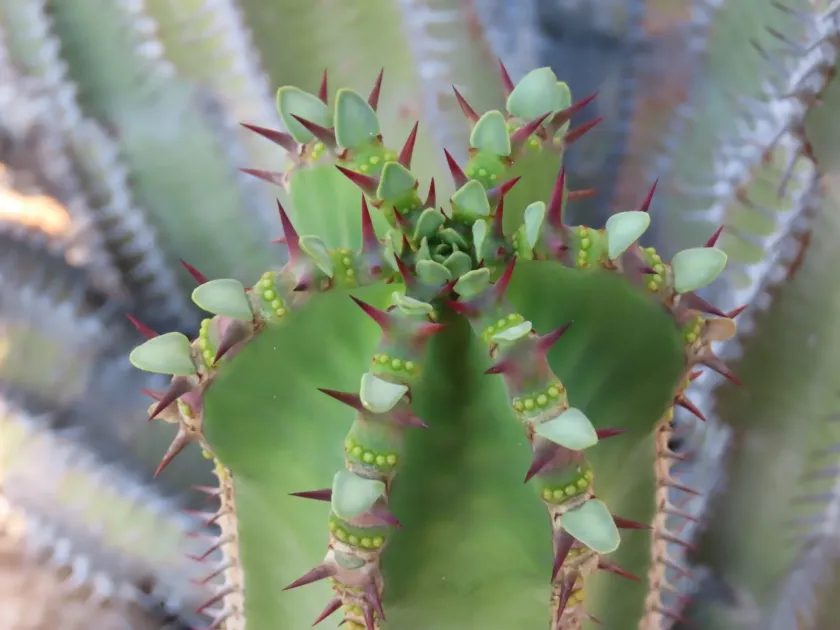
Botanically, it is characterized by a candelabra-like growth pattern, with robust stems that can reach substantial heights. These stems are deeply ribbed and lined with sharp spines, serving as both a defense mechanism and a means to shade the plant's epidermis from intense sun.
Cultivation requires extreme attention to environmental parameters. The plant demands a high-intensity light environment and a mineral-rich, extremely fast-draining substrate to replicate its native rocky habitats. Proper air circulation is also critical to prevent moisture buildup around the base.
Watering requirements are strictly minimal, especially during the colder months when the plant enters a state of dormancy. Overwatering is the most common cause of failure in agricultural settings, as the succulent tissues are highly prone to rapid rotting when moisture levels are uncontrolled.
Economically, this species is utilized mainly in horticulture and as an ornamental specimen in xeriscaping or specialized greenhouses. Its architectural beauty makes it a desirable plant for collectors, although its toxic, caustic sap necessitates careful handling during propagation.
Main diseases and pests
The primary threats to Euphorbia avasmontana are fungal pathogens caused by high humidity and waterlogged soil. In terms of insect pests, mealybugs and spider mites are frequent invaders that can cause structural damage to the stems and interfere with the plant's healthy development.