
Davidson's Plum
Davidsonia pruriens
Description
Growing requirements
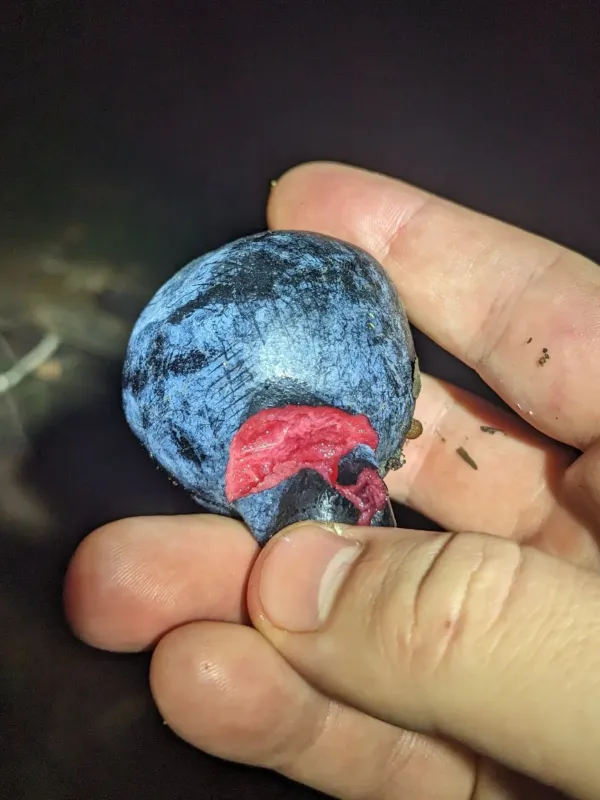
Davidson's Plum (Davidsonia pruriens) is a distinctive evergreen tree belonging to the Cunoniaceae family. Native to the rainforests of Queensland and New South Wales, this species is highly valued for its unique fruit and architectural form.
The species thrives in warm, humid climates with protection from frost. For commercial success, the trees require deep, rich, and well-drained soil, ideally with a neutral to slightly acidic pH level, mimicking the nutrient-dense forest floor of their natural habitat.
In terms of agricultural management, light management is crucial. Young plants require partial shade to establish, while mature trees can tolerate more exposure provided the soil moisture is kept constant. Mulching is a recommended practice to maintain moisture and suppress competitive weed growth.
The cultural practices include regular monitoring of soil nutrition, as these trees are heavy feeders during the rapid growth stages of early summer. Providing balanced liquid fertilizer or high-quality compost helps in achieving consistent fruit quality and vigorous vegetative growth.
Economically, Davidson's Plum is gaining significant market traction. Its fruit is renowned for its intense acidity and complex flavor profile, making it a premium ingredient for specialty food manufacturers, chefs, and the wine-making industry.
Main diseases and pests
The crop is susceptible to various scale insects and thrips that colonize the foliage and soft shoots. Effective Integrated Pest Management (IPM) is essential to monitor these pests before they reach infestation levels that could inhibit fruit development.
Fungal pathogens such as root rot can occur if soil drainage is compromised. To prevent disease spread, growers must ensure optimal spacing and pruning, which improves airflow throughout the tree canopy and reduces the humidity levels that favor fungal growth.
Harvesting
Harvesting is performed by hand, as the fruit is produced on the trunk of the tree. Given the thin skin of the fruit, careful handling is required during the picking process to prevent bruising and maintain high quality for retail markets.