
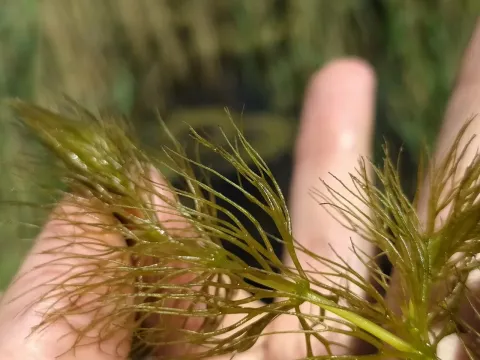
Soft hornwort
Ceratophyllum submersum
Soft hornwort (Ceratophyllum submersum) is a submerged aquatic plant belonging to the Ceratophyllaceae family. Unlike terrestrial crops, it lacks root systems and relies entirely on its specialized foliage to absorb essential nutrients directly from the water column.
What the section contains
Soft hornwort
The species is native to temperate and tropical regions, demonstrating high adaptability to various aquatic environments. In agricultural settings, it is primarily valued for its role in maintaining water quality and serving as a sustainable biofilter in aquaculture systems.
The plant requires stable aquatic conditions, with temperatures ranging from 20 to 28 degrees Celsius for optimal growth. Adequate light penetration is essential, as the plant needs sufficient energy to maintain its dense, floating vegetative structure.
Soil requirements are non-existent in the traditional sense, as the plant floats freely. However, the water chemistry must be monitored; moderate alkalinity and sufficient carbon dioxide levels are vital to prevent yellowing or stunted growth patterns.
Cultivation is strictly vegetative, involving the fragmentation of stem sections. Each fragment acts as a clone, enabling rapid colonization of ponds or tanks. This ease of propagation is a significant agronomic advantage for those using it in hydroponic or aquatic nurseries.
The yield of biomass is exceptionally high due to the plant's rapid vegetative cycle. Under controlled greenhouse conditions with supplemental lighting and nutrient-rich water, the biomass can double in size within just over a week, ensuring high productivity.
Harvesting is performed by mechanical skimming or netting, which is necessary to prevent overpopulation and oxygen depletion at night. Regularly removing excess plant matter is a key part of maintaining balance in any managed water system.