
Spiny hornwort
Ceratophyllum platyacanthum
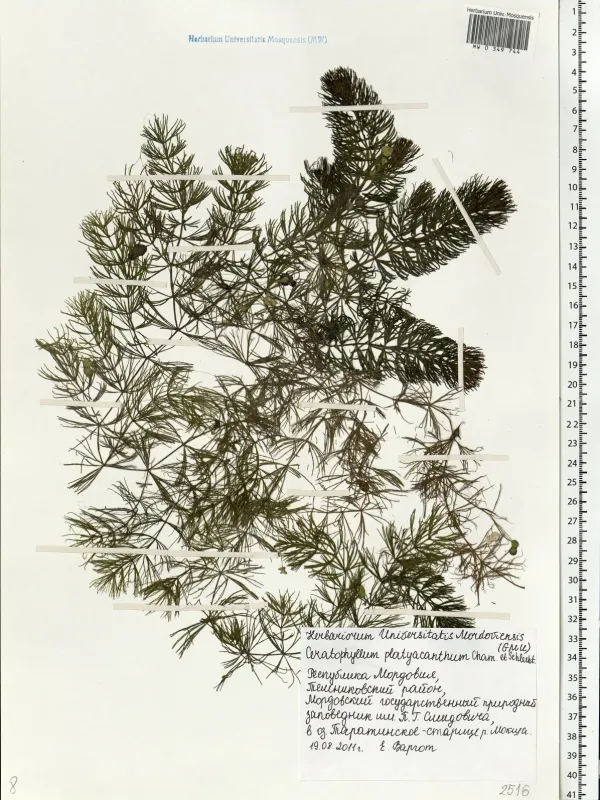
Description
Growing requirements
Spiny hornwort (Ceratophyllum platyacanthum) is a perennial aquatic plant belonging to the Ceratophyllaceae family. It is a fully submerged macrophyte that lacks true roots, relying on specialized structures to stabilize itself within the water column or in the sediment.
The species is native to temperate Eurasia, typically inhabiting stagnant or slow-moving water bodies such as lakes, ponds, and drainage ditches. It thrives in nutrient-rich environments, showing strong adaptability to various light conditions and water chemistries.
Cultivation requirements focus on maintaining adequate light penetration and temperature, typically ranging from 15 to 25 degrees Celsius. As the plant absorbs nutrients directly from the water, water quality management is crucial for healthy biomass development.
In agricultural and aquaculture settings, Spiny hornwort is managed for its high growth rate. It is often employed for phytoremediation purposes, as it effectively captures nitrogen and phosphorus, thereby reducing the risk of eutrophication in managed ponds.
The crop serves vital roles in fisheries, acting as a natural spawning substrate and a habitat for juvenile fish. Its ability to produce oxygen under submerged conditions also contributes to a healthier aquatic environment for commercial fish populations.
Main diseases and pests
The plant is generally robust, but it can be susceptible to fungal infections if the water quality deteriorates significantly. Excessive accumulation of debris can lead to localized hypoxia, which negatively affects plant tissues and overall biomass health.
Pests include various aquatic insect larvae that may feed on the tender shoots of the hornwort. Furthermore, aggressive competition from invasive floating plants or heavy algal blooms can significantly inhibit the growth of the Spiny hornwort by limiting access to light.