
Prickly hornwort
Ceratophyllum echinatum
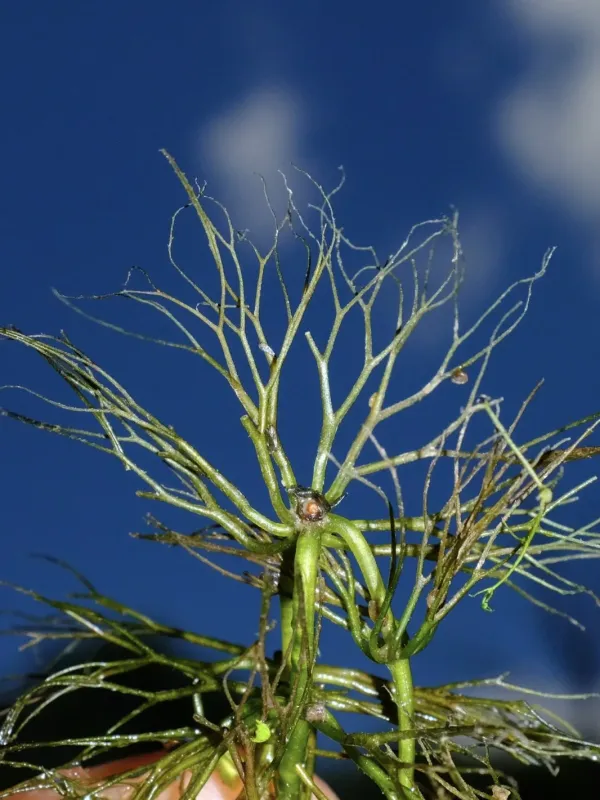
Description
Growing requirements
Prickly hornwort is a member of the Ceratophyllaceae family and is a submerged aquatic plant species. It lacks true roots, utilizing specialized structures known as rhizoids to anchor itself into the substrate within the aquatic environment.
This species naturally inhabits freshwater bodies such as ponds, lakes, and slow-moving streams. It is highly valued for its ability to strip excess nutrients, particularly nitrogen and phosphorus, from the water column, aiding in biofiltration.
The plant thrives in water temperatures ranging from 15 to 28 degrees Celsius. It is adaptable to various light intensities, although higher light availability significantly boosts the rate of vegetative reproduction and biomass accumulation.
Native primarily to North America, it has been integrated into various aquaculture and ornamental settings worldwide. It serves as a vital component in maintaining ecosystem balance and providing shelter for various aquatic organisms.
Cultivation requires minimal technical input as it propagates vegetatively through fragmentation. Ensuring a stable chemical environment and adequate dissolved mineral content is sufficient for rapid population growth in controlled conditions.
Main diseases and pests
Pathogenic fungi are the primary concern, particularly during periods of thermal stress or stagnant water flow. These pathogens can cause stem decay and complete disintegration of the plant structure if left unchecked.
Herbivorous aquatic fauna, such as snails and certain fish species, pose a significant risk to biomass production. Exclusion methods or population control of these pests is necessary to preserve the plant stands.
High levels of water turbidity impede the photosynthetic capacity of the plant, potentially leading to stunted growth or decline. Maintaining clear water is essential for the healthy physiological development of the culture.
Chemical contamination, particularly from agricultural runoff containing herbicides, poses an immediate threat to the plant's health. Strict water quality management is required in areas where the plant is used for biofiltration.
Overpopulation of the plant itself can lead to excessive oxygen depletion at night, which can become self-detrimental. Regular harvesting or thinning of the population is recommended to maintain a healthy aquatic system.