
Southern hornwort
Ceratophyllum australe
Description
Growing requirements
Southern hornwort (Ceratophyllum australe) is a submerged aquatic plant species within the Ceratophyllaceae family. It is distinct for its lack of true roots, meaning it obtains all necessary nutrients directly from the water column, which makes it a highly efficient biological filter in specific environments.
The plant thrives in freshwater environments, particularly in still or slow-moving bodies of water. It is known for its ability to colonize nutrient-rich, eutrophic waters where it effectively absorbs excess nitrogen and phosphorus, contributing to the overall improvement of water quality in such ecosystems.
Temperature requirements are essential for successful cultivation. As a species often found in warmer regions, Ceratophyllum australe grows most rapidly in water temperatures ranging between 20°C and 28°C, which supports robust physiological activity and vegetative propagation.
Regarding water chemistry, the species prefers a neutral to slightly alkaline pH range, typically between 6.5 and 8.5. This alkalinity facilitates the uptake of bicarbonate as an inorganic carbon source, which is vital for maintaining its rapid rate of photosynthesis and structural integrity.
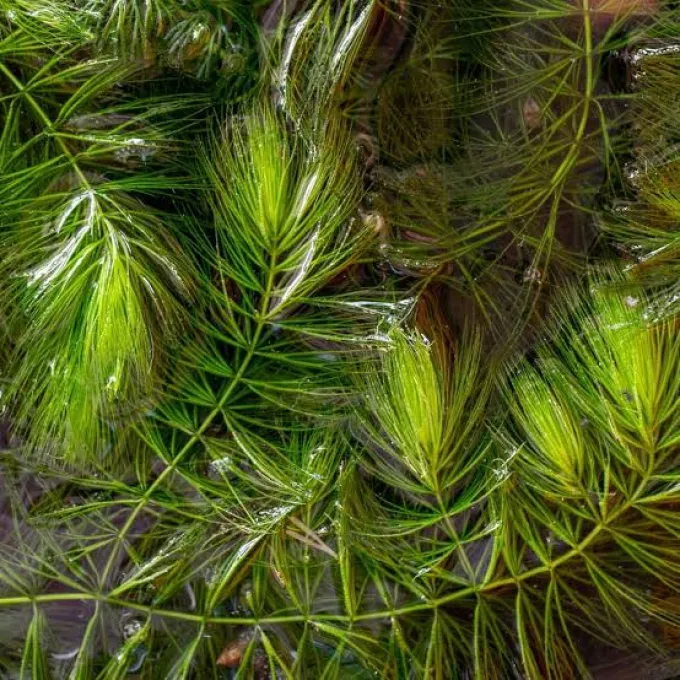
Management in aquatic cultivation emphasizes the control of water flow and light penetration. While the plant is quite versatile, excessive turbulence can damage its brittle, whorled foliage. Therefore, stable, managed aquatic environments are preferred to maximize biomass yield and maintain the plant's health.