
Blood-calyx pink
Dianthus haematocalyx
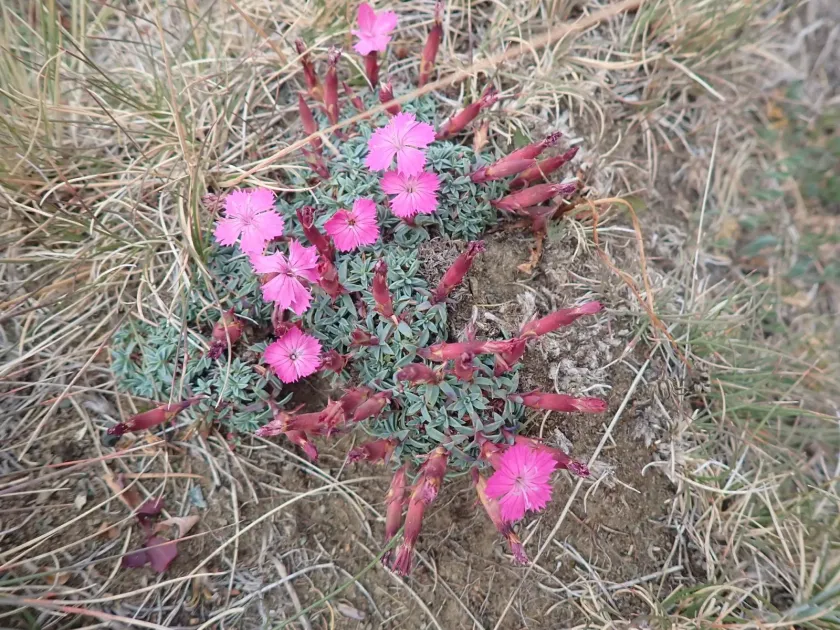
Description
Sowing dates
Sowing of Dianthus haematocalyx seeds is typically performed in late winter or early spring in a greenhouse environment to ensure controlled germination.
Seeds should be surface-sown on a light, well-draining seed-starting mix and only lightly covered with fine grit or vermiculite.
Germination usually takes between two to three weeks if the substrate temperature is maintained around 18 degrees Celsius throughout the process.
Transplanting into the permanent location in the rock garden should be done once the seedlings have developed two true pairs of leaves.
It is important to avoid deep planting of the seedlings, as the base of the stem is sensitive to rot if buried too deeply in the soil.
Growing requirements
As a native of Greek mountainous regions, this plant thrives in poor, rocky, and alkaline soils that provide excellent drainage capacity.
Full sunlight is a critical requirement for this species, as it needs intense light to maintain its compact growth habit and produce vibrant blooms.
The plant is highly drought-tolerant, adapted to surviving on mineral-rich substrates where water evaporates quickly and does not pool.
Adequate air circulation around the crown of the plant is vital to prevent fungal issues, especially in regions with high humidity levels.
Hardiness is significant for this species, allowing it to withstand temperature fluctuations in mountainous climates if the root zone stays dry.
Main diseases and pests
Fungal pathogens such as Fusarium wilt and various root rots are the most serious threats when the plant is grown in unsuitable soil conditions.
Rust disease may occur during damp, stagnant weather, causing orange or brown pustules to appear on the foliage of the plant.
Spider mites are common pests that target the plant during hot, dry spells, causing the leaves to lose their healthy color and vitality.
Regular maintenance, including the removal of dead foliage, is essential to keep the plant vigorous and resistant to seasonal stressors.
- Avoid overwatering to prevent root environment decay.
- Ensure the soil has a high percentage of stone or gravel.
- Monitor the underside of leaves for early signs of mite infestation.