
Carolina sandwort
Arenaria caroliniana
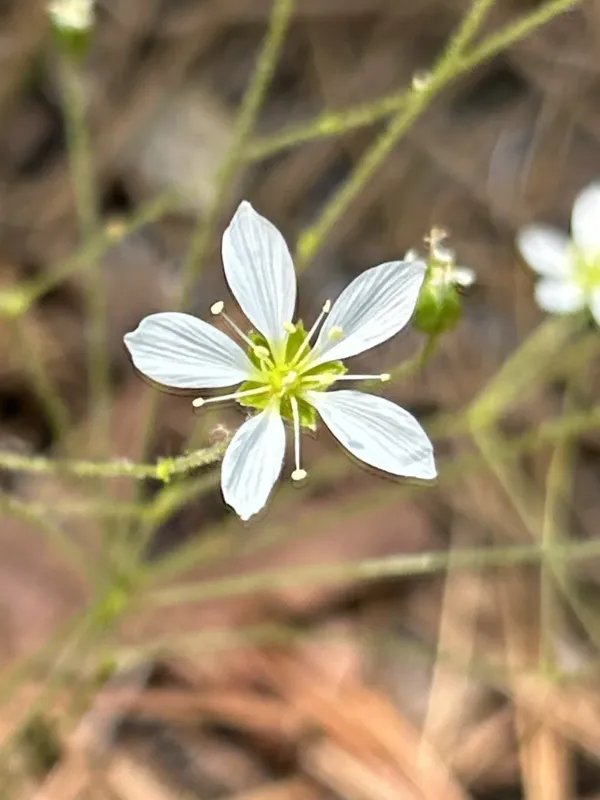
Description
Sowing dates
Carolina sandwort (Arenaria caroliniana) is a distinctive member of the Caryophyllaceae family, well-adapted to the harsh conditions of sandy barrens and dry pine forests.
Propagation is typically carried out by sowing seeds in autumn to allow for natural cold stratification, which significantly improves the germination rates of this species.
When grown in nursery environments, seeds require a well-draining, grit-heavy substrate and should be surface-sown to ensure they receive sufficient light for development.
The transition of seedlings to the permanent growing site should be handled with care to prevent root disturbance, as the plant establishes a deep taproot early on.
Proper spacing is essential to ensure adequate airflow, which is critical for preventing fungal issues that can arise in dense, overcrowded plant clusters.
Growing requirements
This species is highly specialized for habitats with extremely sandy, acidic, and nutrient-poor soils that offer rapid drainage and lack water retention.
It is a quintessential sun-loving plant that thrives in full exposure, requiring no protection from direct solar radiation even during the peak of summer heat.
Water management is the most important factor in the cultivation of Carolina sandwort; the root zone must remain dry, and irrigation should be minimal or absent.
The plant is not tolerant of excessive organic fertilization, which can cause rapid, weak growth and make the plant susceptible to stem rot and other physiological disorders.
Ideal conditions include a climate with low humidity and high air circulation, mimicking the open, wind-swept environments of its native North American range.
Main diseases and pests
The primary threat to the vitality of the plant is root rot caused by stagnant moisture, which can quickly lead to the death of the entire colony.
Fungal pathogens such as Fusarium and Rhizoctonia may affect the root system if the soil medium lacks the necessary aeration and porosity.
Pests such as spider mites may become problematic during periods of extreme drought, particularly if the plant is grown in containers with restricted airflow.
Weed competition is a significant threat in early stages of establishment, as the slow-growing sandwort can be easily overwhelmed by more vigorous grasses and shrubs.
Integrated pest management, including maintaining proper spacing and avoiding overhead irrigation, is highly effective in mitigating most common plant health issues.