
Aubrieta hybrids
Aubrieta hybrids
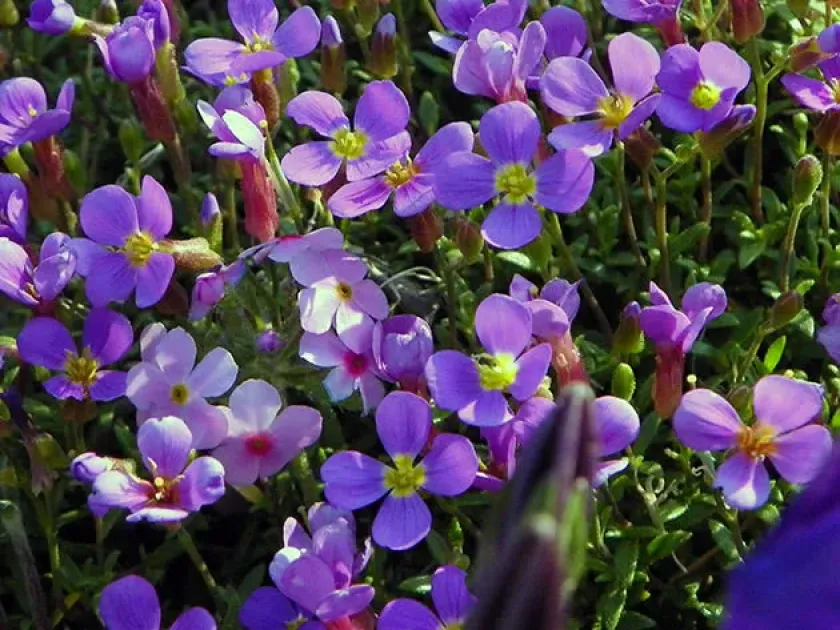
Description
Sowing dates
Sowing seeds of Aubrieta hybrids is typically performed in late winter or early spring in trays. Starting seeds indoors ensures a more uniform development before transplanting into the garden.
Direct sowing into the soil can be done in late spring once the danger of frost has passed. Seeds should be lightly covered with soil as they require light for optimal germination process.
The substrate must be light, porous, and well-draining to prevent damping-off, which is a common issue for seedlings of this genus within the Brassicaceae family.
Maintaining a steady moisture level in the seedbed is crucial, but one must avoid overwatering. Providing adequate ventilation after germination promotes stronger, healthier stems.
When sowing in permanent locations, keep in mind that Aubrieta grows into a dense mat, so spacing should allow for maturity over several growing seasons.
Growing requirements
Aubrieta hybrids thrive in full sun exposure. While they can tolerate partial shade, their flowering density and overall compactness suffer significantly in low-light environments.
The soil requirements are specific: they need neutral to slightly alkaline, well-draining soil. These plants perform exceptionally well in rocky or sandy substrates with low organic content.
Climate tolerance is generally high, as Aubrieta is a hardy perennial. However, it requires protection from severe temperature swings and stagnant water during winter months.
Watering should be moderate, focusing on keeping the roots from drying out while ensuring that excess moisture is drained quickly to avoid root rot.
This species is highly valued for its agricultural use in rock gardens, borders, and as a ground cover plant due to its ability to form vibrant flowering carpets.
Main diseases and pests
Powdery mildew is the most frequent fungal disease, especially in regions with high humidity. It manifests as a white, dusty layer on the foliage, requiring immediate treatment.
Root rot caused by poorly drained soil is a fatal threat. Once the root system is compromised, the plant usually fails to recover and must be removed to protect the rest.
Aphids often target the succulent new growth of the plant during the spring. Regular monitoring and use of insecticidal soap help in controlling these pest populations.
Flea beetles can create small, distinct holes in the leaves, which significantly impacts the aesthetic appeal of the perennial carpet if left unchecked.
Cultural practices such as removing dead foliage after flowering and ensuring good airflow are key components of effective disease and pest management strategies.
Harvesting
While Aubrieta is not a traditional food crop, its "harvest" or maintenance pruning is vital. Trimming back the plants immediately after the first flush of flowers encourages a potential second bloom and maintains a tidy, compact habit.
Pruning should be done with sharp, sterilized tools to prevent the transmission of pathogens between plants. Removing spent flower stems keeps the plant focused on foliage health.
If seed collection is desired, wait for the pods to turn dry and brown before gathering. However, store-bought hybrids often do not grow true from seed collected by the gardener.
The harvest of cuttings for propagation is another common technique. Taking semi-hardwood cuttings in summer allows for the multiplication of the most desirable and healthy specimens.
Always sanitize your gardening tools before and after working with the plants to maintain a clean environment and prevent cross-contamination of fungi or pests.