
Syncarpha argyropsis
Syncarpha argyropsis
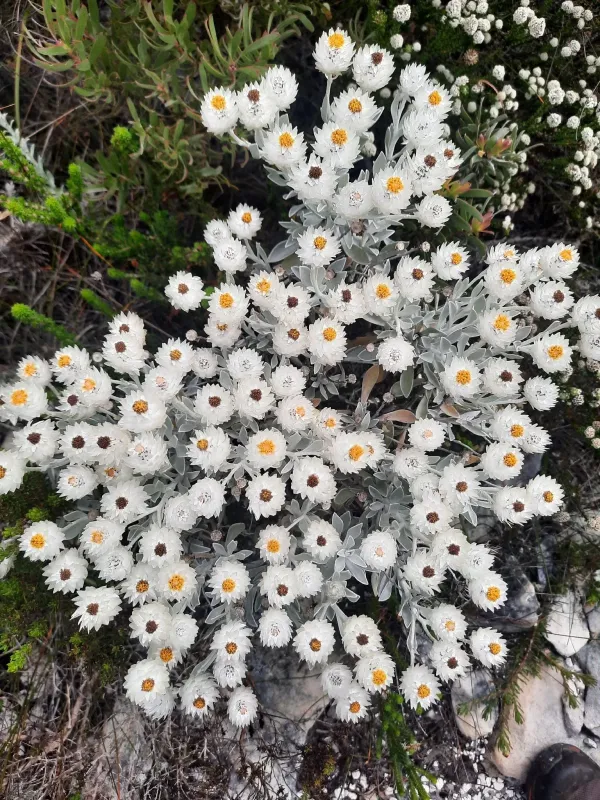
Description
Sowing dates
Syncarpha argyropsis is a member of the Asteraceae family, native to the diverse floral landscapes of South Africa. As a perennial herbaceous plant, its lifecycle is adapted to Mediterranean-like climates where spring sowing ensures optimal germination rates.
In a controlled agricultural setting, seeds are sown in trays during late winter. It is crucial to use a sterile, well-draining seed-starting mix to prevent damping-off, a common issue with delicate seedlings in high-humidity environments.
Light is a vital requirement for the germination of Syncarpha argyropsis seeds. They should be surface-sown and barely covered with a light dusting of vermiculite or sand, ensuring they remain in contact with moisture while receiving sufficient sunlight.
Seedlings are ready for transplanting once they develop two or three sets of true leaves. At this stage, they are transitioned to individual pots to build a robust root system before being moved to the final growing beds.
Hardening off the plants is a necessary procedure before outdoor planting. This step involves gradually exposing the young plants to outdoor temperatures and light conditions over a period of seven to ten days to prevent transplant shock.
Growing requirements
To thrive, Syncarpha argyropsis requires a full-sun exposure site. The plant has evolved in bright, open habitats and will struggle to maintain its compact form and vibrant silver coloration if grown in partial shade.
Soil quality is paramount for this species. It demands lean, sandy, or stony soil with an acidic to neutral pH. High organic content or heavy clay soils are detrimental, as they retain too much moisture and promote root rot pathogens.
Water management is the cornerstone of successful cultivation. While the plant is inherently drought-tolerant once established, it requires consistent watering during the initial growth phases to ensure uniform development of its architectural structure.
Fertilization should be kept to a minimum. Applying high-nitrogen fertilizers is counterproductive as it encourages excessive vegetative growth, which results in weaker stems that are less desirable for the dried flower market.
Proper plant spacing is essential for air circulation. Planting density should be managed to ensure that foliage dries quickly after rainfall or irrigation, significantly reducing the risk of fungal infections such as botrytis.
Harvesting
The harvesting of Syncarpha argyropsis is specifically geared toward the dried flower industry. Timing is critical; flowers should be harvested when the bracts are fully developed but before the central florets have fully opened and shed pollen.
Harvesting must occur during mid-day once all traces of dew have evaporated. Collecting damp stems can lead to rapid degradation, mold, and loss of color intensity during the curing process, rendering the harvest commercially unviable.
After cutting, the stems are bunched together and hung upside down in a clean, dark, and well-ventilated drying shed. This method ensures that the stems stay straight and the weight of the flower head is distributed correctly during dehydration.
The drying process typically takes several weeks depending on the ambient humidity levels. A slow, steady dehydration process is key to preserving the structural integrity and the distinctive silver sheen of the plant's bracts.
Once dried, Syncarpha argyropsis is a staple in professional floristry. Its durability and long-lasting nature make it an ideal choice for permanent botanical installations, bridal bouquets, and high-end dried arrangements.