
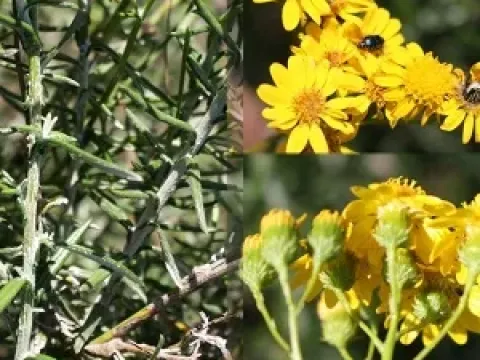
Juniper-leaved ragwort
Senecio juniperinus
Juniper-leaved ragwort (Senecio juniperinus) is a perennial herbaceous plant belonging to the Asteraceae family. This species is recognized for its unique foliage, which resembles juniper needles, providing the plant with excellent adaptations to arid environments.
What the section contains
Juniper-leaved ragwort
Originating from steppe and grassland ecosystems, the plant has evolved to thrive in soils that are often nutrient-poor and structurally unstable. Its ability to colonize such niches makes it a subject of interest for ecological restoration and potential niche cultivation.
Regarding cultivation requirements, Senecio juniperinus demands excellent drainage to prevent root rot. It performs best in well-lit, sunny areas with a soil pH that is either neutral or slightly alkaline, reflecting its natural preference for open steppe conditions.
The plant demonstrates significant resilience against drought and temperature fluctuations, making it suitable for regions with variable climates. Unlike many conventional crops, it does not require supplemental irrigation once established, provided the soil depth is sufficient for root development.
Agricultural management focuses primarily on site selection and early-stage weed control. Since the plant is naturally adapted to harsh environments, it generally resists competition, yet young specimens require protection until they reach full vegetative maturity.
Fungal diseases are the primary threats, particularly in areas with high humidity or poor soil drainage. Maintaining proper spacing and ensuring adequate airflow around the plants is essential for mitigating the risk of pathogen outbreaks.
Pests such as aphids may occasionally infest the plant, especially during warm, dry spells. Integrated pest management, focusing on biological controls, is highly recommended to protect the crop without compromising environmental sustainability.