
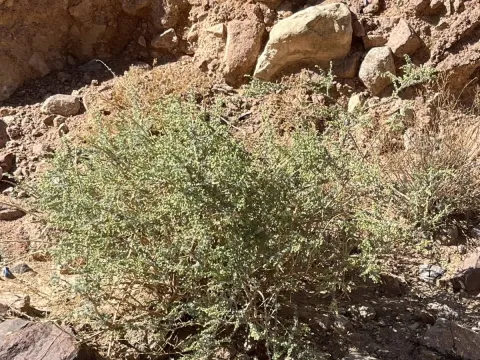
Judean wormwood
Artemisia judaica
Sowing of Artemisia judaica typically occurs after the first autumn rains, which provide the essential moisture needed for seed germination in its natural habitat.
What the section contains
Judean wormwood
For commercial cultivation, seeds are sown in prepared beds during early spring, ensuring protection from sudden temperature fluctuations in the seedling stage.
Seeds are small and require minimal soil cover, as exposure to light is a crucial factor for triggering the germination of this desert species.
Spacing must be carefully managed to allow each plant sufficient room for the extensive root system that Artemisia judaica develops during its growth.
Mechanical seeding methods are increasingly used to ensure uniform planting density, which significantly improves the efficiency of subsequent harvesting operations.
Belonging to the Asteraceae family, Judean wormwood is a true xerophyte, perfectly adapted to the harsh environment of Middle Eastern and North African deserts.
The plant thrives under direct, intense sunlight, which is necessary for the development of the secondary metabolites responsible for its unique medicinal properties.
Soil requirements focus on excellent drainage; sandy or rocky substrates are ideal, as the plant is highly sensitive to waterlogged conditions that cause root rot.
This species shows remarkable tolerance to soil salinity, allowing it to flourish in poor, alkaline substrates where most traditional crops would fail.
Low humidity levels and high air temperatures are beneficial for the plant, as these conditions stimulate the production of essential oils within the leaf tissue.
Fungal infections, such as root rot and powdery mildew, represent the primary threat to plantations, especially when humidity levels exceed the plant's tolerance.
Pests like spider mites and various aphids can cause significant damage to the foliage, necessitating vigilant monitoring during the active vegetative growth phase.
Weed management is critical, as competing vegetation can easily overwhelm young Artemisia plants, leading to stunted growth and reduced yields.
Integrated pest management strategies are essential to protect the crop without compromising the quality of the essential oils for medical and culinary use.
Environmental stress, such as unseasonal frost, can weaken the plants, making them more susceptible to opportunistic pathogens that occur in desert microclimates.
The optimal harvest time is during the peak flowering period, when the concentration of essential oils and active compounds in the aerial parts is at its height.
Harvesting is best conducted in the early morning to prevent the rapid evaporation of volatile aromatic oils caused by the intense heat of the desert sun.
Post-harvest processing involves drying the plant material in well-ventilated, shaded areas to ensure the preservation of the plant's potent chemical profile.
Once dried, the biomass is cleaned of woody stalks and debris to produce a high-quality product suitable for pharmaceutical or essential oil extraction.
Final storage must be in airtight containers in a cool, dark environment to maintain the stability and medicinal efficacy of the dried wormwood for extended periods.