
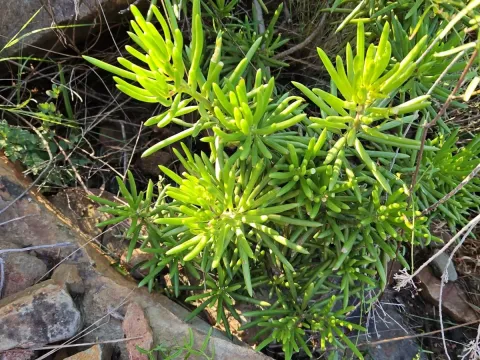
Barberton groundsel
Senecio barbertonicus
Barberton groundsel (Senecio barbertonicus) is a perennial succulent shrub belonging to the Asteraceae family. It is recognized for its dense, cylindrical, finger-like leaves that create an attractive texture in drought-tolerant landscapes.
What the section contains
Barberton groundsel
Native to Southern Africa, specifically the Barberton region, the plant has evolved to thrive in harsh, sun-drenched environments. Its biological adaptation allows it to store water efficiently, making it highly suitable for xeriscaping.
The cultivation requirements focus on excellent drainage and intense light. It performs best in well-draining, gritty soil mixes that simulate its native rocky habitat. Waterlogging must be avoided at all costs to prevent root damage.
This species prefers warm climates and is frost-tender. In cooler regions, it is typically grown in containers, allowing for indoor winter storage when temperatures drop below the survival threshold for this succulent.
The primary horticultural use of Senecio barbertonicus is as an ornamental garden plant. It is frequently utilized in rock gardens, borders, and succulent displays, where its bright yellow flowers provide significant visual interest.
Common pests attacking Barberton groundsel include mealybugs, which tend to congregate in the axils of the leaves. These pests are effectively managed with systemic insecticides or manual removal using cotton swabs dipped in rubbing alcohol.
Root rot is the most serious threat, usually induced by poor drainage or excessive irrigation during the dormant season. Once the roots are compromised by fungi, it is often impossible to salvage the plant, emphasizing the need for a strict watering protocol.
Aphids can sometimes infest the flower heads during the blooming stage. While they are usually a minor problem, heavy infestations can weaken the plant and promote the growth of sooty mold, necessitating targeted insecticidal treatments.
In greenhouses or enclosed areas, poor air circulation can lead to fungal issues and mold development. Maintaining steady airflow is a key agronomic requirement to keep the foliage healthy and free of pathogens.
Regular monitoring for pests, especially in the spring and autumn, ensures early detection of potential outbreaks. Maintaining a clean growing environment is the most efficient way to reduce the overall pressure from pests and diseases.