
Bahiopsis
Bahiopsis
Bahiopsis is a genus of shrubs belonging to the Asteraceae family, native to the arid and semi-arid regions of North America, including Mexico and the southwestern United States. These plants have evolved to thrive in harsh environments, characterized by high sunlight exposure and minimal rainfall.
What the section contains

Bahiopsis
The primary requirement for successful cultivation of Bahiopsis is a well-draining soil environment. These plants are highly susceptible to root rot if water accumulates around the base, which is why sandy or rocky soils are ideal. Neutral to slightly alkaline pH levels provide the best conditions for nutrient uptake.
Sunlight is the most critical factor for the growth and flowering of this plant. It should be planted in areas that receive full, direct sun throughout the day. While it is naturally drought-tolerant, supplemental watering during the initial establishment phase is recommended to ensure deep root development.
From a functional perspective, Bahiopsis is widely used in xeriscaping, an approach to landscaping that reduces or eliminates the need for supplemental water. Furthermore, the plants play a vital role as nectar sources for native pollinators, which is highly beneficial for the surrounding agricultural ecosystem.
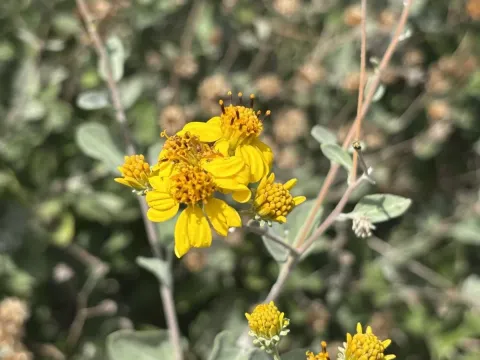
Botanically, Bahiopsis species are characterized by tough, woody stems and vibrant yellow flower heads that resemble small sunflowers. The foliage is often pubescent (covered in fine hairs), which serves as an adaptation to reduce transpiration in high temperatures. Pruning spent flowers helps maintain a neat shape and may promote secondary blooms.
The most significant threat to Bahiopsis is fungal infection resulting from excessive moisture or poor soil drainage. Maintaining a dry crown and ensuring proper air circulation are the most effective preventative measures against pathogens that affect root health.
Pests such as aphids and spider mites can occasionally affect the foliage, especially under stress conditions. Integrated pest management, focusing on biological controls or targeted insecticidal applications, is advised to keep populations in check without disrupting local pollinator activity.