
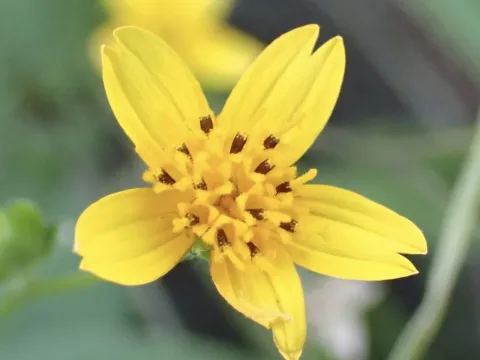
Baltimora
Baltimora
Baltimora recta is an annual herbaceous plant that begins its life cycle with seed germination during the warming period of early spring.
What the section contains

Baltimora
The timing of sowing or spontaneous germination is strictly dependent on soil temperature rising above the threshold necessary for metabolic activation.
Seedlings develop rapidly under favorable moisture conditions, showing a competitive growth rate against surrounding vegetation in open spaces.
Seeds are known to be persistent in the soil seed bank, which allows the species to re-emerge over multiple seasons without human intervention.
Agronomic management usually focuses on early tillage or pre-emergent herbicide application to keep fields clear of unwanted Baltimora populations.
Belonging to the Asteraceae family, Baltimora is native to the tropical and subtropical regions of Central and South America.
The plant thrives in well-lit environments and prefers fertile, well-drained soils that support vigorous vegetative growth during the summer.
It exhibits a high degree of climatic adaptability but performs best in warm zones where frost is absent throughout its growth cycle.
Soil nutrient content significantly impacts the size and reproductive capacity of individual plants within a given field or landscape area.
Requirements for water are moderate, though the plant can tolerate short periods of drought once the root system has become fully established.
Like many species in the Asteraceae family, Baltimora is susceptible to common fungal pathogens, particularly those causing powdery mildew in dense stands.
Insect pests, including various aphids and leaf-feeding larvae, often utilize the plant as a food source, impacting its biomass and vigor.
Effective management against this species involves integrated pest and weed control strategies to maintain high crop yield in infested areas.
The presence of the plant may serve as a reservoir for specific agricultural viruses that can subsequently spread to nearby cash crops.
Monitoring the edge of agricultural plots is essential, as these zones typically serve as the primary areas for colonization and subsequent spread.