
Polycalymma stuartii
Polycalymma stuartii
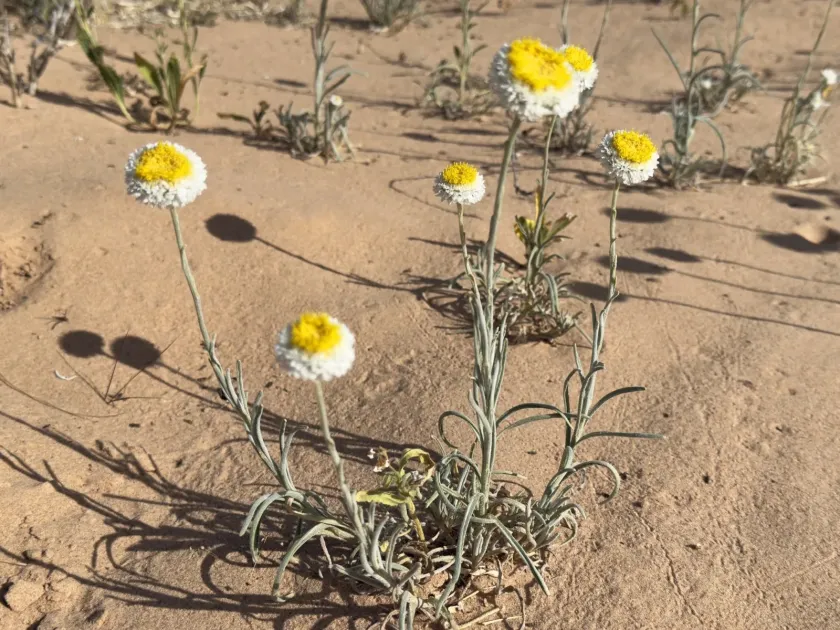
Description
Growing requirements
Polycalymma stuartii, commonly known as the desert sunflower, is a specialized herbaceous plant belonging to the Asteraceae family. It is a true xerophyte, perfectly adapted to the harsh environments of arid Australia.
The species is native to the central and western deserts of the Australian continent. It occupies niche habitats such as sand dunes and arid plains where water scarcity is the primary limiting factor for most vegetation.
Botanically, it features distinct foliage covered with fine, hair-like structures. This adaptation is crucial for maintaining internal moisture levels by creating a microclimate that prevents rapid water loss during intense heatwaves.
Environmental requirements for this plant include extremely high solar irradiance and well-drained sandy substrates. It thrives in soils that provide superior aeration and do not retain excessive moisture, which would otherwise threaten root health.
As a specialized wild species, it relies on natural moisture cycles in the desert. It is not currently cultivated as a commercial agricultural crop, but its biological mechanisms are of significant interest for plant stress physiology studies.