
Portuguese daisy
Leucanthemum lacustre
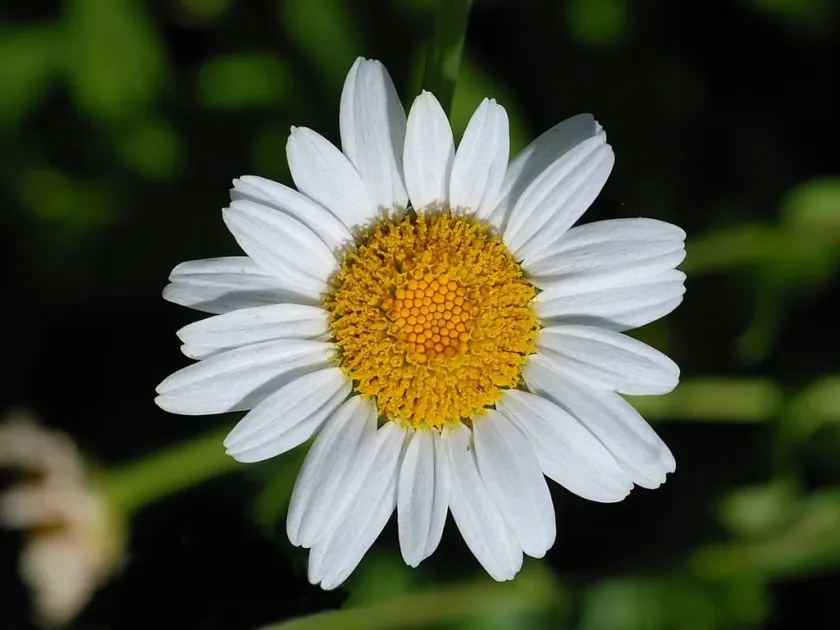
Description
Sowing dates
The Portuguese daisy (Leucanthemum lacustre), a member of the Asteraceae family, is a robust perennial herb. Seeds should be sown in early spring once the soil temperature consistently reaches 12 degrees Celsius to ensure uniform germination.
For commercial production, starting plants in greenhouses or nurseries is recommended. Sowing seeds into trays during late winter allows for the development of strong root systems before transplanting into the field in late spring.
Transplanting is a critical stage in the crop cycle. Seedlings should be spaced approximately 40 centimeters apart to prevent overcrowding, which can inhibit plant health and limit the quality of the harvested flower stems.
Vegetative propagation via clump division is often performed on mature specimens. This process is best executed in the spring or autumn, helping to rejuvenate established patches and ensuring consistent genetic traits.
Consistency in the sowing depth is essential. Seeds should be lightly covered with soil or vermiculite, ensuring they are not buried too deep, as light is often beneficial for the initial stages of germination in this species.
Growing requirements
This crop thrives in well-drained, fertile soils with a neutral pH. While it is adaptable to various soil types, waterlogged conditions must be strictly avoided to prevent root and crown rot.
Sun exposure is paramount for the Portuguese daisy. Plants should be located in full sun to partial shade environments to maximize stem strength and flower production throughout the growing season.
Regular irrigation is necessary, particularly during the peak of summer, to support the rapid growth of stems. However, overhead watering should be minimized to reduce the incidence of foliar diseases.
Balanced fertilization programs, incorporating nitrogen in the early vegetative stages and potassium as the blooming period approaches, significantly boost both yield and overall aesthetic quality.
Climatic adaptability is one of the strengths of the Portuguese daisy. It requires a temperate environment but benefits from winter mulch in colder regions to protect the crown from extreme temperature fluctuations.
Main diseases and pests
Fungal pathogens such as Fusarium wilt and powdery mildew are the most common threats to field-grown plants. These diseases are frequently exacerbated by high humidity and poor soil aeration.
Disease management requires a combination of cultural practices, such as ensuring proper spacing between plants to facilitate air circulation, and the judicious application of chemical fungicides.
Pest pressures, primarily from aphids and spittlebugs, can be significant during the active growing phase. These pests extract sap from the plant tissue, leading to deformed flower heads and stunted growth.
Integrated Pest Management (IPM) strategies, including the use of biological control agents and targeted insecticidal applications, are recommended to protect the integrity of the harvest.
Early detection of infestation is vital. Monitoring programs should be conducted weekly, especially during the spring, to address potential outbreaks before they impact a large portion of the crop.