
Syrian thistle
Notobasis syriaca
Description
Growing requirements
The Syrian thistle (Notobasis syriaca) is a monotypic genus of flowering plants belonging to the Asteraceae family. It is primarily recognized as a thorny annual herb that acts as a significant weed in various Mediterranean agricultural systems.
This species thrives in open, sunny habitats with well-drained soils. It exhibits a high degree of adaptability, often colonizing degraded agricultural lands, pastures, and roadsides where it competes effectively for sunlight and soil nutrients.
The native range of the Syrian thistle extends across the Mediterranean region, the Middle East, and North Africa. It is highly resilient to the arid conditions of these regions, having evolved mechanisms to survive intense summer heat and seasonal drought.
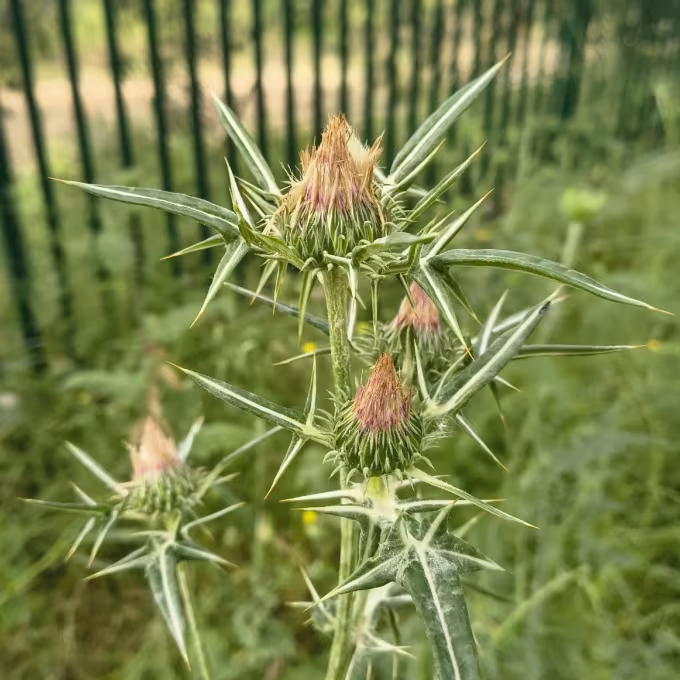
The botanical structure is characterized by an erect, branched stem covered with sharp spines on both leaves and involucral bracts. The flowers appear in distinctive purple clusters that bloom in late spring, producing abundant seeds that facilitate rapid dispersal.
Economically, the Syrian thistle is rarely a cultivated crop but is appreciated by beekeepers as a late-season honey plant. In agricultural settings, it is treated as a nuisance because the spiny stalks can damage harvesting equipment and interfere with crop processing.
Main diseases and pests
The plant is susceptible to various pests, particularly stem-boring insects and aphids that exploit its succulent tissue. Furthermore, fungal pathogens such as rust fungi and powdery mildew can infect the foliage when environmental humidity levels rise unexpectedly.