
German chamomile
Matricaria recutita L.
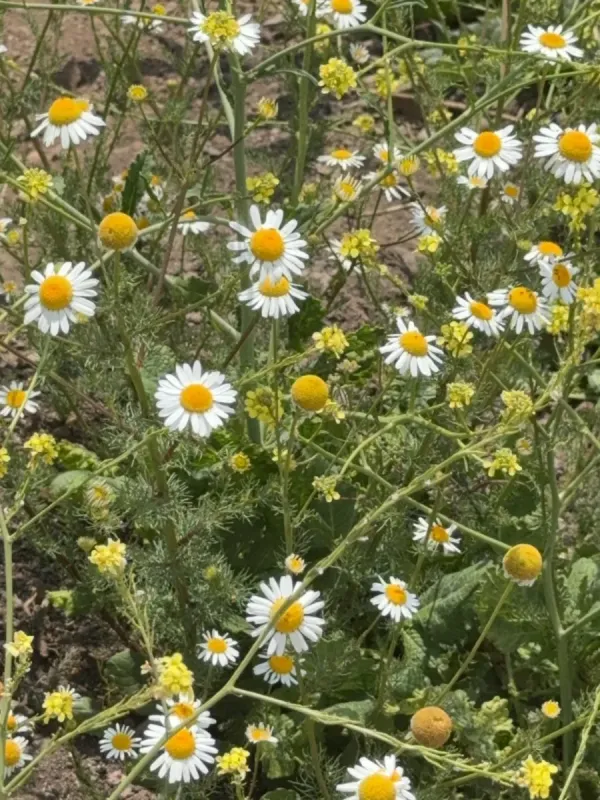
Description
Sowing dates
German chamomile (Matricaria recutita) is an annual plant in the Asteraceae family. For optimal germination, seeds are typically sown in late autumn, allowing for a natural cold stratification process before early spring emergence.
Spring sowing should occur as soon as the soil is workable, typically in early March or April depending on the latitude. Since the seeds are minute, they require a very shallow covering of approximately 0.5 cm of soil, as they are photoblastic and need light to germinate efficiently.
The standard spacing for professional cultivation involves rows 45 to 60 cm apart. This distance is essential to facilitate mechanical weeding and ensure that the plants have enough space to develop robust branching and high flower yield.
Once seedlings reach the two-to-three leaf stage, thinning is necessary to achieve a plant density of approximately 5–10 cm between individuals within the row. Proper spacing is critical to prevent overcrowding and ensure adequate airflow around the base of the plant.
The seeding rate is approximately 1–2 kg per hectare. Precision seeding equipment is recommended to maintain uniformity, as irregular stands make subsequent mechanical harvesting significantly more difficult and less efficient.
Growing requirements
German chamomile thrives in temperate climates with moderate rainfall. While it adapts to a wide range of soil types, it prefers well-drained, fertile, loamy soils with a slightly acidic to neutral pH for maximum biomass and essential oil production.
Light is a critical requirement for this crop. It is highly photophilic, and any significant shading—whether from adjacent trees or dense weed growth—will result in reduced yields and lower quality of the essential oils, particularly chamazulene content.
In terms of soil moisture, the plant requires consistent hydration throughout the vegetation phase. However, excessive water during the flowering stage should be avoided, as it can cause lodging, reduce flower shelf life, and complicate the harvesting process.
The plant is relatively hardy and can tolerate late spring frosts, which is an advantage for early season growth. However, it is sensitive to extreme heat, which can trigger early senescence and lower the chemical potency of the harvested blossoms.
Crop rotation is essential for sustainable production. Chamomile should not be grown on the same field more than once every three or four years to prevent the buildup of soil-borne pathogens and to maintain soil structure and nutrient balance.
Yield
Yield expectations for German chamomile are measured in dry flower weight per hectare. Depending on management practices, yields typically range between 600 to 1,000 kilograms of high-quality dried flowers per hectare.
Frequent harvesting is the key to maximizing total seasonal yield. Because the plant responds to pruning by producing new lateral shoots and flower buds, growers can perform multiple harvests—often 5 to 7 times—throughout the summer growing season.
The quality of the yield is highly dependent on the precision of the harvest. Pharmaceutical standards require that flower heads be gathered with minimal stalk material, as excessive foliage lowers the concentration of active ingredients in the final product.
Yields are also influenced by the timing of the harvest relative to the developmental stage of the flower. Harvesting at the peak of bloom, when the ray florets are horizontal, ensures the highest possible essential oil yield per unit of dry weight.
Efficient post-harvest handling is critical to maintaining yield quality. Since dried chamomile is a high-value product, minimizing loss during drying and processing is as important as the cultivation efforts put into the field itself.
Main diseases and pests
Common diseases affecting German chamomile include powdery mildew and downy mildew, which thrive in conditions of high humidity and poor air circulation. Management focuses on preventive measures such as appropriate row spacing and strictly avoiding over-irrigation.
Pests, particularly aphids, can cause significant damage by feeding on young buds and shoots. Integrated pest management (IPM) strategies, which prioritize biological control and the use of natural predators, are preferred over synthetic insecticides to ensure the final product meets safety standards.
Root rot, often caused by Pythium or Phytophthora species, poses a threat in poorly drained soils. Improving soil drainage and strictly adhering to crop rotation schedules are the most effective ways to manage this risk in a field setting.
Weed competition is a constant threat throughout the growing season. Weeds not only compete for water and nutrients but also increase the risk of disease transmission and can contaminate the harvest, leading to significant downgrading of the medicinal value.
Monitoring the moisture levels of the plant material during storage is essential to prevent mold growth, which can render an entire batch of harvested chamomile useless for medicinal purposes within a very short period.
Harvesting
Harvesting is performed during dry, sunny weather once the morning dew has evaporated. This ensures that the flowers have the lowest possible moisture content, which is crucial for reducing the energy required for the subsequent drying phase.
Specialized chamomile harvesting equipment, often featuring comb-like mechanisms, is used to lift and snip the flowers directly from the stems. Modern harvesters allow for adjustable cutting heights, ensuring high-quality, stalk-free flowers.
Drying must commence immediately after harvest to prevent fermentation. Fresh flowers are spread in thin layers in well-ventilated dryers, with temperatures strictly controlled between 40°C and 45°C to preserve the volatile components of the essential oil.
After the drying process, the product is cleaned of debris and sieved to standardize the size. Once the target moisture level is reached, the chamomile is packed into moisture-resistant containers for storage in a cool, dark environment.
Quality control during harvest and post-harvest involves regular checks for impurities, discoloration, and essential oil content, ensuring compliance with both local and international herbal pharmacopeia standards.