
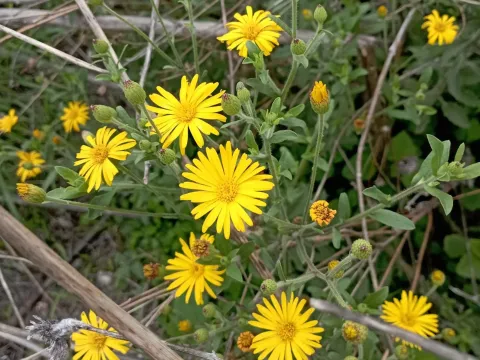
Mexican arnica
Heterotheca inuloides
Heterotheca inuloides, widely recognized as Mexican arnica, is a perennial flowering plant in the Asteraceae family. For optimal cultivation, seeds should be started indoors in seed trays during early spring to ensure a long growing season before the final frost.
What the section contains
Mexican arnica
The seedlings are ready for transplanting into the open field once the soil temperature consistently reaches 15 degrees Celsius. The chosen plot must provide full sun exposure and have protection from strong, prevailing winds.
Proper spacing is crucial for healthy development; plants should be set roughly 60 centimeters apart to allow for airflow and ease of maintenance throughout the season.
While seed sowing is the primary method of establishment, vegetative propagation through root division is also viable for mature plants, usually performed during early spring or late autumn.
Good weed control during the seedling stage is essential, as the young plants are delicate and can easily be outcompeted by aggressive weeds in the early growing phase.
This crop thrives in well-draining, loose soils, such as sandy loams, which prevent waterlogging of the sensitive root system. Poor drainage is the most significant cause of crop failure.
Heterotheca inuloides performs best in neutral to slightly acidic soil conditions. It is relatively adaptable, but consistency in soil quality will lead to more uniform growth and higher harvest yields.
Although the plant exhibits some drought tolerance once established, consistent irrigation during the peak summer flowering months is necessary to maintain high production levels of essential oils.
Full sun is a critical requirement for this species. Reduced light exposure results in weak, leggy growth and a marked decrease in the concentration of active medicinal compounds within the flower heads.
Strategic fertilization with balanced NPK nutrients, particularly focusing on potassium and phosphorus before the flowering stage, significantly enhances the plant's overall vigor and chemical yield.
The primary economic focus of the cultivation is the harvest of the flower heads, which are highly valued in the pharmaceutical and cosmetic industries for their specific terpenoid content.
Yield potential increases significantly from the first to the second year, with established perennial plants producing the highest volume of high-quality inflorescences.
Sustainable harvesting practices ensure the longevity of the plantation, allowing for continuous production over a 4 to 5-year cycle before replanting becomes necessary for yield maintenance.
Processing the yield involves drying the harvested flower heads under shaded, ventilated conditions to preserve the integrity of the essential oils and volatile bioactive substances.
Efficiency in collection and post-harvest handling is critical, as the market quality of the dried product is judged by its color, purity, and the retention of active constituents.
High humidity levels pose a threat to this crop by encouraging fungal growth, such as powdery mildew, which can damage the foliage and reduce the overall health of the plantation.
Pests like aphids and spider mites are common concerns during hot, dry periods. These insects can cluster on the tender parts of the plant and cause significant damage if left unchecked.
Integrated pest management, including the use of botanical insecticides or encouraging beneficial predatory insects, is preferred over synthetic chemicals to maintain the medicinal purity of the crop.
Maintaining proper spacing between rows is a simple yet effective cultural practice to promote air circulation, which significantly lowers the risk of disease outbreak within the field.
Regular monitoring and removal of infected plants can help prevent the rapid spread of infections, ensuring the stability and productivity of the entire commercial site.
The harvest period is focused on the stage where flower heads are fully opened but before the formation of seeds begins, ensuring the highest concentration of active ingredients.
Manual harvesting is highly recommended to ensure only prime-quality flowers are selected, preventing bruising or contamination of the floral material during the collection process.
Once gathered, the flowers must be moved to a clean, shaded, and well-ventilated drying area as quickly as possible to prevent excessive moisture build-up and fermentation.
After the drying process is complete, the final product must be stored in airtight containers, protected from light and humidity, to ensure a long shelf life and consistent potency.
Final sanitation after the harvest involves cutting back the spent foliage and clearing the site to minimize the overwintering of pathogens and pests for the subsequent season.