
Guizotia abyssinica
Guizotia abyssinica (L. f.) Cass.
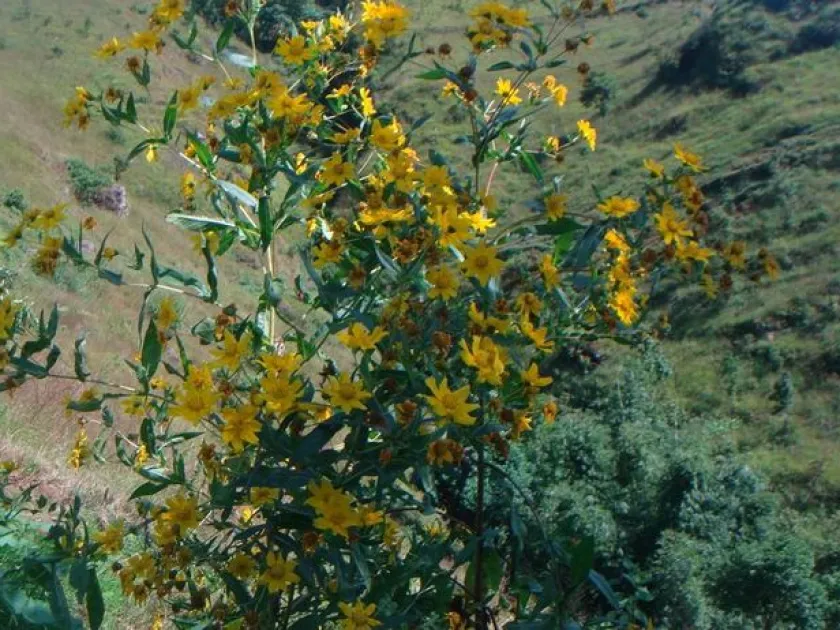
Description
Sowing dates
Guizotia abyssinica is a heat-loving crop, therefore planting is carried out strictly after the threat of spring frosts has passed. The soil must warm up to at least 12-15 degrees Celsius at the seeding depth.
The optimal time for sowing in regions with a suitable climate is the second half of spring or early summer. It is important to choose a period with sufficient moisture, as young seedlings are sensitive to drought.
The sowing method is usually row planting with row spacing from 30 to 50 cm, which allows plants to actively tiller. The seeding rate is about 8-10 kg per hectare, keeping the planting depth no more than 2-3 cm.
The crop is characterized by rapid growth in the initial period, which helps it effectively suppress weeds in the field. Early sowing allows for maximum utilization of winter and spring soil moisture reserves.
After sowing, rolling the field is recommended to ensure better contact between seeds and the soil, which is critical for the uniformity of Guizotia emergence.
Growing requirements
The plant belongs to the Asteraceae family and has moderate requirements for soil fertility, preferring light loams or sandy soils with a neutral reaction.
The crop is extremely light-demanding and does not tolerate shading, which must be considered when choosing a site. Guizotia has high heat resistance; however, for good seed yield, sufficient rainfall is required during the flowering phase.
Moisture availability is a key factor limiting the cultivation area of this crop outside the tropical belt. Excessive waterlogging, leading to water stagnation, is destructive to the plant's root system.
The optimal temperature for vegetation is 20-25 degrees Celsius. Sudden temperature fluctuations and cold snaps below 5 degrees can significantly slow down the crop's development and reduce the final oil content of the seeds.
Guizotia is not demanding of predecessors, but it shows the best results when planted after cereal grains or row crops that leave the field weed-free.
Yield
The yield of Guizotia abyssinica seeds under proper agricultural practices varies in the range of 0.5 to 1.5 tons per hectare, depending on the region and the level of farming intensity.
The oil content of the crop seeds is 30-40%, making it a valuable raw material for the production of food and industrial oils. The quality of the oil is valued for its content of essential fatty acids.
Yield is significantly influenced by the availability of micronutrients, especially in poor soils where the application of phosphorus-potassium fertilizers provides a pronounced increase in biomass.
When grown for green manure or forage, the yield of green mass can reach 20-30 tons per hectare, making the crop promising for soil improvement.
Maximum productivity indicators are achieved with an even distribution of rainfall during the budding and head-forming period, where the achenes are produced.
Main diseases and pests
Guizotia abyssinica is characterized by high field resistance to most typical sunflower diseases; however, under high humidity, it can be affected by downy mildew.
Among pests, various types of aphids and the meadow moth pose the greatest danger, as they can damage the leaf apparatus and reduce the photosynthetic activity of the plants.
During dry periods, crops can be damaged by spider mites, which requires monitoring of field conditions and the implementation of protective measures when the economic threshold of damage is exceeded.
Root rots can occur with systematic violation of crop rotation and cultivation of the crop in the same place for several years in a row, which contributes to the accumulation of infection in the soil.
Disease prevention consists of high-quality soil preparation, the use of treated seed material, and maintaining spatial isolation from other Asteraceae crops.
Harvesting
Harvesting is carried out by direct combining when the achenes acquire a characteristic dark color and the seed moisture content drops to 12-14 percent.
An important aspect is the timeliness of starting work, as seed shattering occurs if harvesting is delayed, leading to significant yield losses in the field.
Combine adjustment should be aimed at minimizing seed injury, as the achene shell in Guizotia is quite fragile and can be damaged at excessive drum speeds.
After harvesting, seeds require immediate cleaning of organic impurities and drying in barns or dryers to moisture levels safe for storage.
During storage, it is necessary to control the temperature regime and humidity levels to prevent self-heating and spoilage of the valuable oilseed raw material in warehouses.