
Galactites duriaei
Galactites duriaei
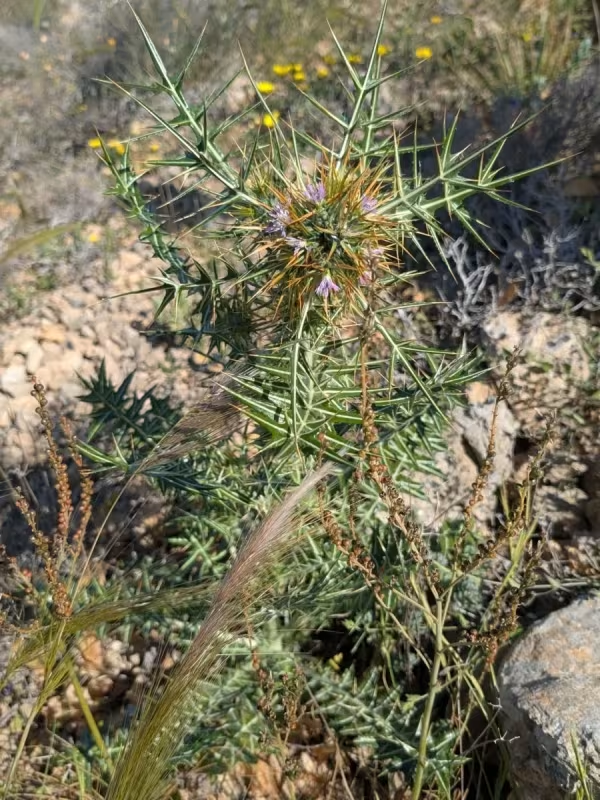
Description
Sowing dates
Galactites duriaei is a member of the Asteraceae family, typically propagated through seed dispersal in natural Mediterranean habitats. In an agricultural setting, precise timing is essential for successful establishment.
Sowing should take place in late spring once the soil temperature has stabilized at a moderate level. Seeds require a well-prepared seedbed that is free of debris to ensure optimal contact with the soil.
The recommended sowing depth is approximately 1.5 to 2 centimeters. Placing seeds deeper can result in delayed emergence, while surface sowing leaves the seeds vulnerable to desiccation and bird damage.
Spacing is critical due to the wide leaf rosette that develops during the vegetative stage. A minimum distance of 40-50 centimeters between plants allows for adequate air circulation and eases mechanical maintenance.
Direct seeding is preferred over transplantation, as the plant possesses a deep taproot system that is sensitive to structural disruption. Gentle watering immediately after sowing helps to firm the soil around the seeds.
Growing requirements
This species thrives in open, sunny locations with direct sunlight exposure for most of the day. It is highly adapted to Mediterranean climates where high solar radiation is a constant during the growth season.
Well-draining, rocky, or calcareous soils are ideal for Galactites duriaei. The plant is notoriously intolerant of waterlogged conditions, which often lead to root rot and immediate plant decline.
While the plant exhibits significant drought tolerance, supplementary irrigation during the peak growing season ensures higher biomass production. Excess nitrogen fertilization should be avoided as it promotes soft growth and disease susceptibility.
The climate requirements include moderate to warm temperatures throughout the vegetation cycle. It is not considered a frost-tolerant crop, although mature plants can withstand brief, mild cold snaps.
Soil aeration is a fundamental requirement for healthy development. Periodic cultivation between rows, while being careful not to disturb the root zone, maintains soil structure and prevents crusting after heavy rains.
Main diseases and pests
Fungal diseases are the primary threats, particularly in environments with poor ventilation or high humidity levels. Powdery mildew can quickly spread across the foliage, reducing the photosynthetic efficiency of the plant.
Aphid infestations frequently occur during the early spring growth phase. These pests cluster on succulent new shoots, causing stunting. Integrated pest management, focusing on beneficial predatory insects, is recommended.
Root-knot nematodes can pose a long-term threat in intensive cultivation systems. Preventive measures include ensuring proper crop rotation and soil solarization if the site has a history of nematode presence.
Competition from fast-growing weeds during the initial establishment phase can suppress the growth of Galactites duriaei. Manual or organic mulching is an effective way to suppress weed competition without the use of herbicides.
Finally, maintaining plant vigor through appropriate irrigation and sanitation practices remains the best defense against various pathogens. Removing and disposing of infected plant material promptly prevents secondary spreading.