
Galactites tomentosus
Galactites tomentosus
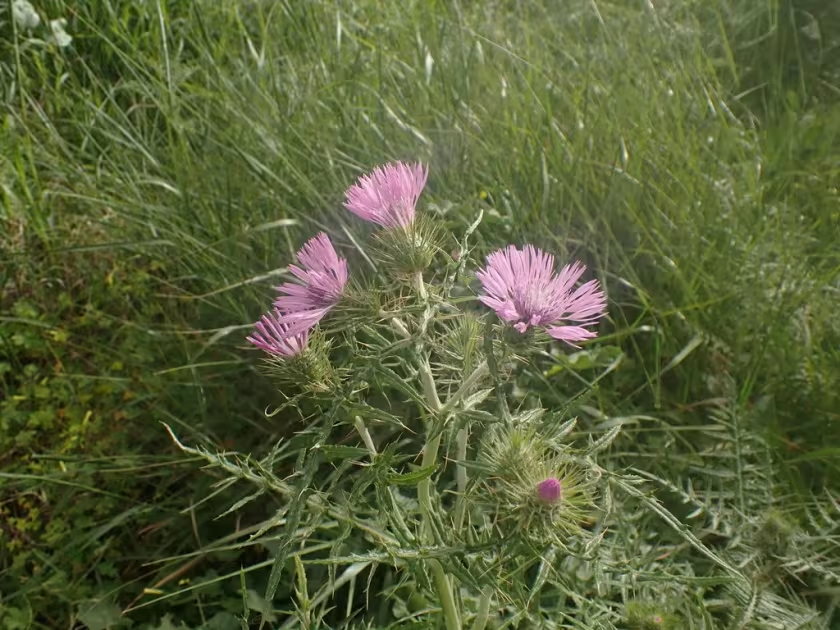
Description
Sowing dates
Galactites tomentosus is typically propagated by seeds during the autumn months, aligning with the natural Mediterranean growth cycle. Early sowing allows the plant to establish a robust rosette before the onset of winter temperatures.
The seeds should be sown at a shallow depth of approximately 2 cm in well-prepared, loose soil. Uniform seeding depth is essential for consistent emergence, particularly when managed on a larger agricultural scale.
Row spacing should be maintained to allow for adequate ventilation and sunlight penetration, which helps prevent the development of moisture-related fungal diseases within the crop canopy.
Optimal germination occurs when soil temperatures remain moderate. In colder regions, protective measures may be required to shield young seedlings from extreme frost, although the species is generally hardy.
Succession planting can be considered in irrigated zones to ensure a steady supply of biomass, though timing must be managed carefully to avoid peak summer heat during the most vulnerable early stages of growth.
Growing requirements
This species thrives in full sun and requires well-drained soil types. It is particularly well-adapted to limestone-rich soils, making it an excellent candidate for agricultural use in rocky or calcareous environments.
Water management is critical; while the plant is drought-tolerant once established, it cannot withstand waterlogged conditions. Adequate drainage is a fundamental prerequisite for long-term survival.
The plant demonstrates a preference for neutral to slightly alkaline pH levels. It is highly efficient at utilizing soil nutrients, which can be an advantage in low-input agricultural systems.
High exposure to light is necessary for healthy development. Shaded environments inhibit growth and result in weak, succulent-prone stems that are susceptible to lodging and pests.
Soil structure should be managed to ensure aeration. Periodic cultivation between rows helps to break soil crusting and promotes healthy deep-root development, which is vital for the plant's drought resistance.
Yield
Galactites tomentosus is valued for its biomass production, particularly in sustainable farming systems. When harvested at the pre-flowering stage, the plant provides high-quality forage rich in nutrients.
The total yield per hectare is significantly influenced by plant density and the availability of nitrogen during the spring flush. Efficient harvesting techniques are required to manage the plant's physical structure effectively.
Farmers can utilize the biomass as green manure, incorporating the plant back into the soil to improve organic matter content and soil structure after the primary growth phase has concluded.
Seed production is another potential output, with the plant displaying prolific reproductive capacity. Harvesting seeds requires specific equipment to handle the fluff and light weight of the mature seed heads.
The inclusion of this species in pastoral mixtures can enhance the resilience of the grazing land, providing a feed source that remains productive even when more sensitive species begin to suffer from water stress.
Main diseases and pests
Aphids are the most common pest observed on this crop, often clustering on the tender buds and young stems. Early monitoring and the use of integrated pest management strategies are advised to keep populations in check.
Fungal issues such as powdery mildew can become a concern in environments with high humidity and poor airflow. Managing plant density and ensuring proper site selection are the primary defenses against these infections.
Root pathogens are largely restricted to sites with poor drainage. If the soil remains saturated for long periods, the likelihood of root rot significantly increases, which can destroy the crop.
Competition from aggressive, fast-growing weeds during the initial establishment phase can suppress the growth of Galactites tomentosus. Mechanical weeding is effective if performed early in the season.
Overall, the plant is relatively robust, and most risks can be mitigated by ensuring that the selected site meets the basic climatic and drainage requirements of this Mediterranean species.