
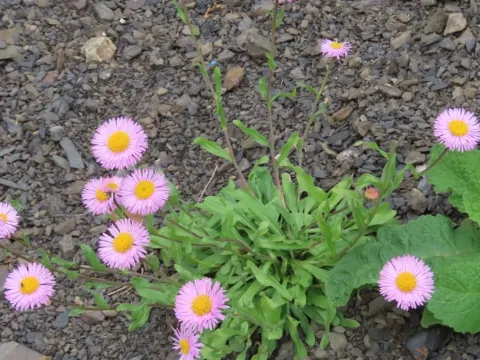
Caucasian fleabane
Erigeron caucasicus
Caucasian fleabane (Erigeron caucasicus) is a perennial herbaceous plant belonging to the Asteraceae family, valued for its hardiness and floral beauty.
What the section contains
Caucasian fleabane
Seeds should be sown in autumn or early spring; for best results, stratification is recommended to break dormancy and ensure uniform germination across the plot.
Given the fine size of the seeds, they require shallow sowing at a depth of about 0.5 cm in a fine-textured soil medium to prevent deep burial.
Seedlings should be transplanted to their permanent location once they develop their first true leaves, ensuring they are spaced at least 30 cm apart.
Optimal germination occurs at temperatures between 15°C and 20°C, provided the soil moisture is maintained consistently throughout the initial development phase.
This species originates from Caucasian mountain habitats and thrives best in full sun exposure, which is necessary for vigorous growth and abundant flowering.
The ideal soil is sandy or loamy with excellent drainage, as the plant is highly sensitive to waterlogged conditions which often lead to root rot issues.
While relatively drought-tolerant once established, supplemental watering during the peak of summer is advised to support the plant through its reproductive stage.
The plant performs best in neutral to slightly alkaline soil pH, making it highly adaptable to various garden soils if drainage is sufficiently addressed.
Applying a thin layer of compost or mulch around the base of the plant helps retain soil moisture while suppressing weed competition during the growing season.
Powdery mildew is the most common fungal issue affecting this species, particularly when plants are grown too close together or in humid conditions with poor airflow.
Aphids and spider mites are typical pests that can infest the foliage, especially during warm and dry periods, causing leaf discoloration and stunted growth.
To mitigate pest risks, it is essential to maintain clean planting areas and remove any debris where pathogens or insect eggs might harbor during the colder months.
Integrated pest management, including the use of neem oil or insecticidal soaps, is highly effective for controlling infestations without disrupting the local ecosystem.
If fungal infections appear, applying sulfur-based fungicides or maintaining better ventilation by thinning out dense foliage will significantly reduce spread.
For medicinal or decorative purposes, the aerial parts should be harvested during full bloom when the active compounds are at their peak concentration levels.
Harvested stems should be dried in a cool, dark, and well-ventilated location to prevent the loss of essential oils and to maintain the plant's vibrant color.
Once fully dehydrated, the plant material should be processed, removing stems and impurities, and stored in opaque, airtight containers to preserve its quality.
Regular deadheading of spent flowers throughout the season will stimulate continuous blooming and prevent the plant from wasting energy on seed production.
In preparation for dormancy, the plants should be trimmed back to the basal growth before the first hard frost to protect the crown and ensure spring regrowth.