
False daisy
Eclipta prostrata
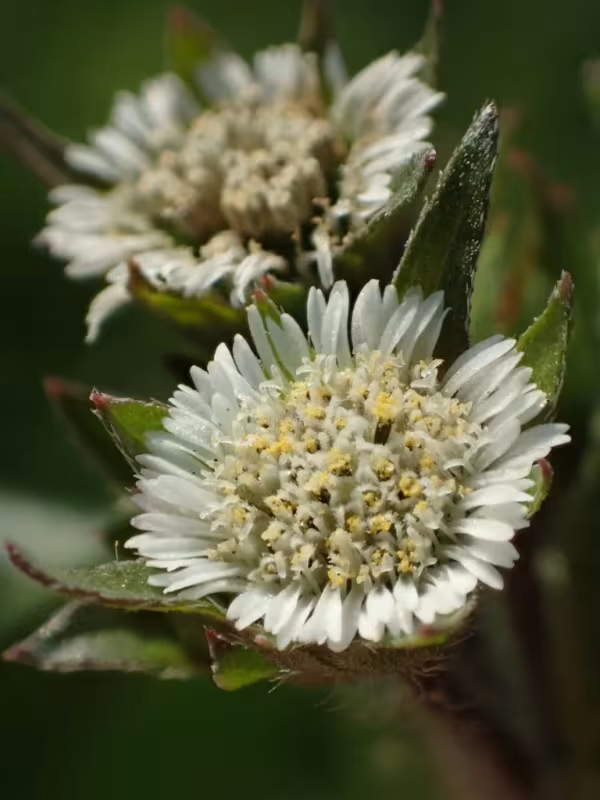
Description
Sowing dates
Eclipta prostrata, a member of the Asteraceae family, is a heat-loving annual herb. The optimal sowing time begins when soil temperatures consistently reach +18°C to +20°C, typically in late spring.
In cooler temperate zones, starting seeds indoors or in a greenhouse 4–6 weeks before the last frost is highly recommended. This ensures the plants have a sufficient growing season to reach maturity before the onset of cold weather.
For direct seeding, rows should be spaced 40–50 cm apart to allow for vigorous branching. Seeds should be sown at a shallow depth of approximately 0.5–1 cm, requiring consistent moisture to ensure uniform germination.
Seedbed preparation is vital; the soil should be fine and weed-free to prevent the slow-growing seedlings from being outcompeted in their early development stages.
Once seedlings reach a height of 5 cm, thinning is necessary to maintain a spacing of 25–30 cm between plants, promoting better air circulation and reducing the risk of fungal infections.
Growing requirements
As a plant native to tropical and subtropical wetlands, Eclipta prostrata thrives in environments with high humidity and constant moisture availability. It is often found naturally near marshes, irrigation canals, and damp fields.
The ideal soil is rich in organic matter, loam-based, and capable of high water retention. A soil pH ranging between 6.0 and 7.0 is optimal for nutrient uptake and healthy metabolic function.
Full sun exposure is crucial for the development of secondary metabolites. While the plant can tolerate partial shade, maximum yield and potency are achieved only under direct, intense sunlight throughout the growing period.
Consistent irrigation is mandatory. Eclipta does not handle drought well; prolonged dry periods will trigger early flowering and senescence, which significantly reduces the quality of the harvested biomass.
Nutrient management focuses on nitrogen during the vegetative phase to maximize leaf production. Applying balanced liquid fertilizers every few weeks can significantly boost the overall yield of the crop.
Main diseases and pests
Fungal diseases, particularly root rots and leaf spots, represent the primary threat to Eclipta production. These conditions are usually exacerbated by excessive soil moisture and poor airflow within the crop canopy.
Aphids are the most prevalent pest, feeding on the tender stems and leaves. If left unchecked, these insects cause stunted growth and vector viral diseases that can destroy entire plots of the crop.
Spider mites can become a problem in hot, dry conditions. Maintaining adequate humidity around the plants serves as a natural deterrent, while biological controls are preferred for management.
Weed control is critical during the first 6–8 weeks of growth. The use of organic mulches not only suppresses weed pressure but also helps maintain the soil moisture levels that the plant requires.
Regular monitoring of the lower leaves is necessary to detect early signs of mildew, which can occur if plants are spaced too closely or if humidity levels remain stagnant for extended periods.
Harvesting
The harvesting stage is critical for medicinal efficacy. The crop should be harvested just as the first flowers begin to bloom, as this is when the concentration of key bioactive compounds is at its maximum.
Harvesting involves cutting the entire plant roughly 5–10 cm above the ground. In large-scale operations, mechanical harvesting equipment can be used to improve efficiency during this time-sensitive window.
Post-harvest processing requires immediate handling. The green biomass should be dried in a shaded, well-ventilated area to prevent fermentation and the loss of essential oils.
For industrial production, tunnel dryers set at a maximum temperature of +40°C are used to ensure the final product retains its natural color and chemical integrity.
Once dried, the plant material should be packed in airtight containers or moisture-proof bags and stored in a cool, dark environment to preserve its potency for up to two years.