
Cape ivy
Delairea odorata Lem.
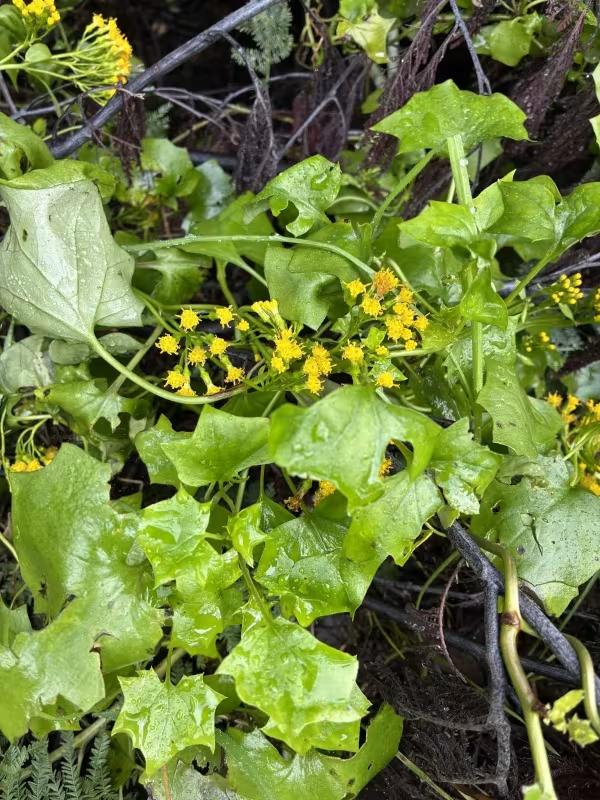
Description
Growing requirements
Cape ivy (Delairea odorata) is a fast-growing, evergreen vine belonging to the Asteraceae family. Originally from South Africa, this climbing plant is known for its high adaptability to shaded forest environments and riparian zones in its native range.
The plant requires rich, moist, and well-drained soils to thrive. It performs best in environments with high humidity and consistent moisture levels, although it is susceptible to root rot if the growing medium becomes waterlogged for extended periods.
Climate-wise, Cape ivy is frost-sensitive and thrives in mild, temperate, or subtropical zones. In colder regions, it is treated as a houseplant or greenhouse ornamental, requiring bright, indirect light to maintain its characteristic foliage density and health.
Cultivation practices involve regular pruning to control its vigorous growth, as individual vines can quickly reach several meters in length. Providing sturdy structural support is essential for vertical training, and balanced fertilizers are recommended during the growing season.
While used as an ornamental climber for landscaping, Cape ivy is highly regarded for its aesthetic value. However, in many parts of the world, it is classified as a significant weed due to its rapid spread and ability to form dense mats that shade out native vegetation.
Main diseases and pests
The primary pests affecting Cape ivy include aphids, spider mites, and whiteflies, which are common issues in greenhouse settings. Effective management involves maintaining adequate ventilation and using targeted acaricides or insecticides when infestation occurs.
Root diseases such as Pythium and Phytophthora are the most significant threats to the health of the plant. These are usually induced by poor drainage and excessive soil moisture, making careful irrigation management the primary strategy for disease control.