
Aloidendron tongaense
Aloidendron tongaense
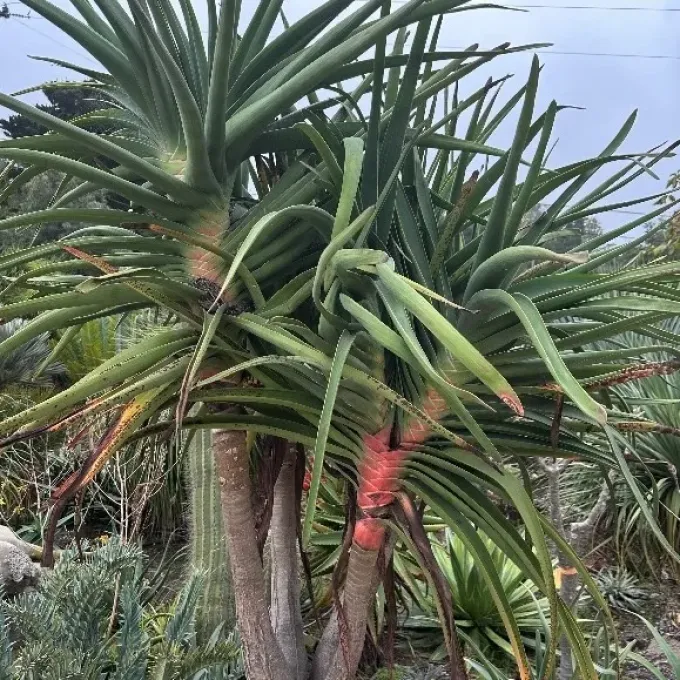
Description
Growing requirements
Aloidendron tongaense is an impressive tree-like succulent belonging to the Asphodelaceae family. Native to the coastal regions of KwaZulu-Natal in South Africa, it is known for its architectural form, reaching significant heights in its natural environment.
The cultivation of this species requires abundant sunlight and well-draining, sandy or gravelly soil. It is highly adapted to arid conditions and cannot tolerate soil saturation, which leads to rapid root system decline and plant decay.
Regarding climate, this plant thrives in warm environments with minimal frost. While it is hardy in Mediterranean-like climates, protection from freezing temperatures is essential for maintaining health, making it an excellent candidate for conservatory and container gardening in cooler zones.
Agrotechnical maintenance involves infrequent but deep watering during the active growing season. During the winter months, it is crucial to allow the plant to remain dry to mimic its natural dormancy period and prevent fungal diseases.
Aloidendron tongaense is primarily utilized in landscape design and ornamental horticulture. Its vibrant red, tubular flower clusters provide significant aesthetic value, making it a sought-after specimen for xeriscaping and drought-tolerant gardens.
Main diseases and pests
Fungal rots are the most serious threat to Aloidendron tongaense, usually caused by improper soil aeration or overwatering. Maintaining a dry, well-ventilated environment is the primary preventative measure against such pathogens.
Common pests include mealybugs and scale insects, which settle in the crevices of the succulent leaves. Monitoring the foliage and applying appropriate insecticidal soaps or systemic treatments when necessary will help protect the integrity of the plant.