
Aloidendron barberae
Aloidendron barberae
Description
Growing requirements
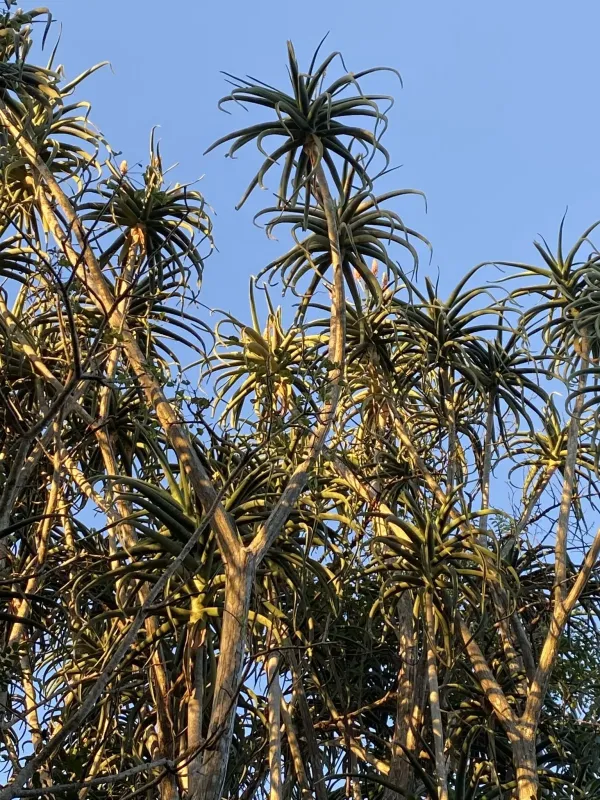
Aloidendron barberae, formerly known as Aloe barberae, is a giant tree-like succulent belonging to the Asphodelaceae family. It is renowned for its architectural beauty, characterized by a smooth, grey, branching trunk and a massive crown of deep green leaves.
Native to the coastal forests of South Africa, this species thrives in subtropical climates. It is highly valued in horticulture for its ability to create a dramatic focal point in landscapes where frost-free conditions are guaranteed.
Optimal growth requires full sun exposure and well-drained, porous soil. In cultivation, a mix composed of loam, coarse grit, and perlite is recommended to prevent water accumulation around the roots, which is crucial for this plant's longevity.
The plant demonstrates significant drought tolerance once established. However, during the active growing season, moderate watering is essential to maintain the lush appearance of the leaves and to support the structural growth of the trunk.
In colder regions, Aloidendron barberae must be managed as a container plant. Moving it into a bright, frost-free environment during the winter is a mandatory aspect of its care to prevent tissue damage from low temperatures.
Main diseases and pests
The primary threat to Aloidendron barberae is root rot caused by improper drainage or overwatering. Once rot penetrates the trunk, the plant becomes extremely difficult to save, emphasizing the need for a preventive approach to watering.
Insect pests such as scale insects and mealybugs can infest the dense leaf rosettes. Regular monitoring and the application of suitable systemic insecticides or horticultural oils are recommended to keep the plant healthy and free from damage.