
Aloidendron ramosissimum
Aloidendron ramosissimum
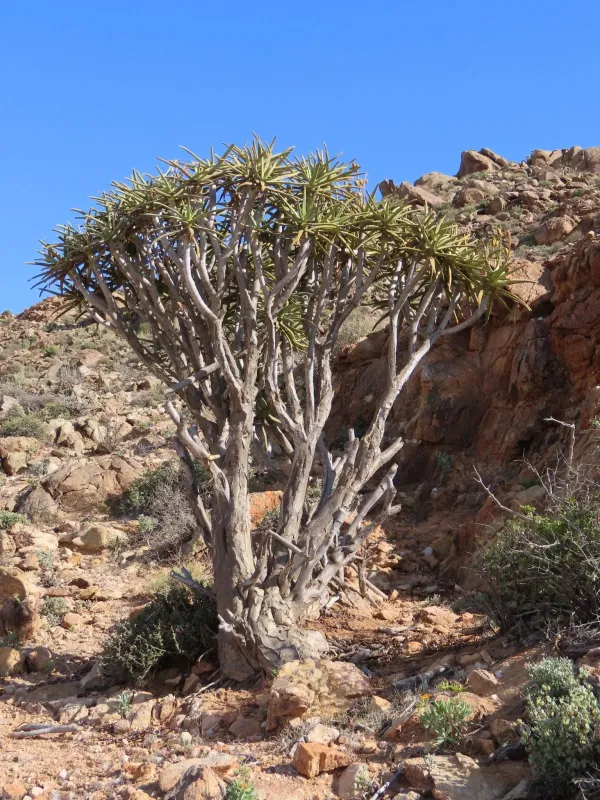
Description
Growing requirements
Aloidendron ramosissimum, commonly known as the maiden's quiver tree, is a succulent plant belonging to the Asphodelaceae family. It is distinguished by its branched structure and tree-like growth habit in arid environments.
The species originates from the semi-desert regions of Southern Africa, particularly parts of Namibia and the Northern Cape of South Africa. It thrives in high-heat and low-rainfall zones, showcasing remarkable biological endurance.
Successful cultivation requires soil that is exceptionally well-draining, such as sandy or gritty substrate mixes. The primary agricultural necessity is to prevent standing water, which can be fatal to the root system of this succulent.
Full sun exposure is a mandatory requirement for the healthy development of this plant. It is widely cultivated in botanical collections and arid landscaping projects, provided the local climate prevents frost damage.
Beyond its ornamental appeal, the plant represents an important genetic resource for drought-tolerant species. Its architecture makes it a staple for xeriscaping in regions with Mediterranean or arid climates.
Main diseases and pests
The most significant threats to Aloidendron ramosissimum are related to moisture management, as humidity coupled with poor airflow leads to fungal pathogens.
Root rot is the most common physiological disorder caused by overwatering or using heavy, clay-rich potting media that retain moisture for too long.
Pests such as mealybugs and scale insects represent the main biological threats. They hide in the dense branches of the plant, often going unnoticed until the infestation is severe.
These pests suck plant sap, leading to weakened growth, yellowing foliage, and susceptibility to secondary infections in the damaged areas.
- Strict watering schedule based on moisture levels.
- Proper air circulation in greenhouse environments.
- Regular use of horticultural soaps for pest management.