
Podolasia stipitata
Podolasia stipitata
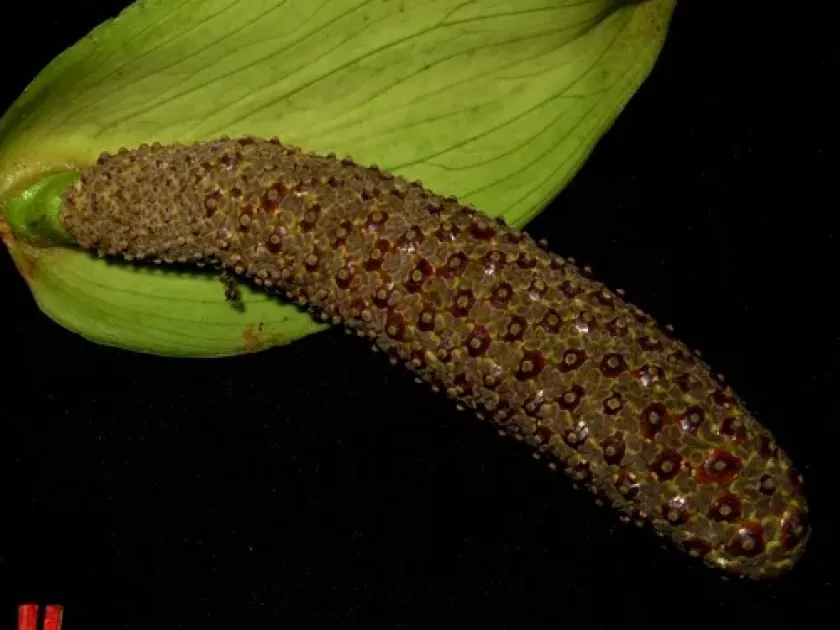
Description
Sowing dates
Podolasia stipitata reproduces primarily through seeds or the division of rhizomes. Seeds must be sown immediately after maturation as they lose viability rapidly if allowed to desiccate, requiring high humidity for germination.
In cultivation, seeds should be sown in a sterile, organic-rich, and well-draining substrate. Temperatures ranging from 25 to 28 degrees Celsius are necessary to trigger germination within a reasonable timeframe.
When propagating via rhizome division, sections containing at least one growth point should be carefully separated. This method is preferred to maintain the genetic uniformity of the specimens and ensure faster establishment of the plant.
Sowing containers should be kept in a sheltered area with diffused lighting. Preventing the substrate from drying out is crucial, as the natural habitat of this species is constantly moist and swampy.
Once seedlings emerge, they should be gradually acclimated to wider spacing. Ensuring adequate airflow while maintaining high humidity levels is a delicate balance required during the early stages of development.
Growing requirements
As a member of the Araceae family, Podolasia stipitata is native to the tropical regions of Southeast Asia. It thrives in swampy areas and riverine forests where humidity remains consistently high throughout the year.
The plant demands a warm climate with temperatures never dropping below 15 degrees Celsius. It is highly sensitive to cold, which necessitates greenhouse cultivation in non-tropical regions to ensure survival.
The soil should mimic a forest floor environment, featuring high organic matter content, acidity between 5.5 and 6.5, and excellent water retention. The roots require consistent moisture but must have enough structure to avoid anaerobic decay.
Diffused light is essential for optimal growth, as direct sun exposure can severely scorch the leaves. Its natural habitat under the canopy makes it well-adapted to shaded, humid environments.
Morphologically, the plant features distinct petioles and a unique inflorescence protected by a spathe. Its physiological adaptation to submerged or waterlogged conditions makes it a fascinating subject for specialized botanical study.
Main diseases and pests
Root rot, driven by various fungal pathogens, is the most common threat when the substrate is too wet and temperatures are insufficient. Proper drainage and sanitation are critical to preventing these infections.
Spider mites are the primary pest concern, especially when humidity levels drop below optimal ranges. These pests can quickly debilitate the plant by feeding on the sap, leading to chlorosis and leaf drop.
Mealybugs are known to colonize the base of the petioles, where they are shielded from physical removal. Regular scouting and the application of systemic treatments are effective strategies for management.
Bacterial leaf spot can occur if water sits on the leaf surface for extended periods without adequate ventilation. Keeping the environment well-ventilated reduces the incidence of such diseases.
Root nematodes may infest the rhizomes if the growing media is not properly sterilized. Implementing strict hygiene practices before planting is the most effective way to protect the plant from these soil-borne pests.