
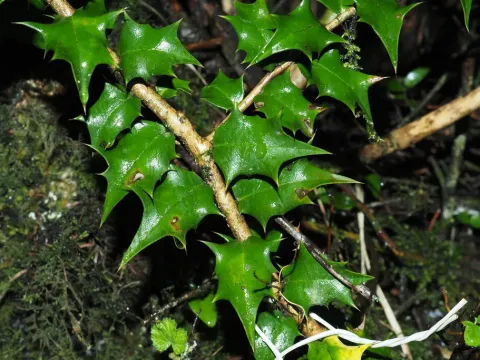
Biorits Holly
Ilex bioritsensis
Propagation of Biorits Holly (Ilex bioritsensis) is primarily achieved through seeds or stem cuttings. Seed germination is naturally slow and requires a prolonged stratification period to break dormancy, often lasting up to 18 months.
What the section contains
Biorits Holly
Sowing should ideally occur in the autumn, allowing seeds to experience natural seasonal temperature fluctuations. Consistent substrate moisture is critical, as seeds are sensitive to desiccation throughout the long germination process.
Stem cuttings are the preferred method for maintaining the desired characteristics of ornamental cultivars. Semi-hardwood cuttings are typically taken in mid-summer and placed in a humid environment with rooting hormones to facilitate establishment.
Young plants are usually grown in nursery conditions for several years before final transplanting. Providing adequate space between individuals is essential for optimal airflow, which promotes a balanced growth habit and prevents foliage issues.
Using nursery-grown specimens with established root balls significantly improves transplant success in garden settings, ensuring the plant can quickly adapt to its new environment.
Biorits Holly belongs to the family Aquifoliaceae and is native to mountainous regions of China. It thrives in climates characterized by moderate humidity and protection from extreme winter freezes and drying winds.
The plant requires fertile, well-drained soil with a slightly acidic to neutral pH. Avoid planting in compacted or waterlogged soils, as the root system of Ilex bioritsensis is highly susceptible to hypoxia and decay.
Partial shade is the ideal exposure, particularly in regions with intense summer sun. Excessive light can bleach the foliage and reduce the characteristic deep green luster that makes this shrub so valuable in landscape design.
Regular watering is necessary during the establishment phase. Once mature, the plant displays moderate drought tolerance, though mulching the root zone helps maintain consistent soil moisture and temperature levels.
Applying a balanced fertilizer in the early spring encourages vigorous growth and foliage density. Proper maintenance also includes light pruning to shape the bush and remove any dead or crossing branches.
Powdery mildew is a common concern for Biorits Holly, particularly in stagnant, humid air. Good spacing and strategic pruning are effective cultural controls, supported by appropriate fungicide applications if an outbreak occurs.
Scale insects and mealybugs can infest the foliage, leading to yellowing and stunted growth. These pests often excrete honeydew, which can further encourage the growth of sooty mold on the leaf surfaces.
Aphids occasionally target new spring growth, causing leaf curling. Systemic insecticides or insecticidal soaps can be used for control if infestations become severe enough to impact plant aesthetics.
Root rot is the most serious threat, usually caused by poor drainage or overwatering. Preventing water accumulation at the base is essential for the long-term health and survival of the specimen.
Routine inspection of the plant's health is the most effective defense. Early detection of any pest or disease signs allows for localized treatment and prevents the problem from spreading across the shrub.