
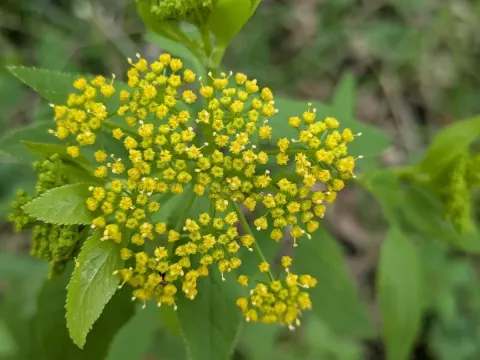
Zizia
Zizia W. D. J. Koch
Propagation of Zizia is primarily achieved through seeds, which benefit significantly from a cold stratification period to break dormancy. Sowing in the fall is recommended to allow the natural winter freeze to prepare the seeds for germination.
What the section contains

Zizia
If spring sowing is preferred, seeds should be stratified in a refrigerator for at least 30 to 60 days before planting. Sowing depth should remain shallow, typically around 0.5 cm, as seeds require light to germinate effectively.
When starting indoors, use a well-draining seed starting mix and provide consistent moisture. Seedlings are usually ready for transplanting once they develop several sets of true leaves and local frost risks have passed.
Spacing is a critical factor for optimal development; planting individuals 30 to 40 cm apart encourages better airflow and prevents overcrowding. This spacing is also vital for reducing humidity-related diseases.
Direct sowing in the field requires a weed-free seedbed. Covering the area with a thin layer of mulch can help maintain moisture levels and protect the delicate seedlings from temperature fluctuations.
Zizia belongs to the Apiaceae family and is native to North America, often found in prairies and woodlands. It is a hardy perennial known for its adaptability to various temperate climatic conditions.
The plant thrives in full sun to partial shade, though it produces the most vigorous flowering in full sunlight. Soil preference leans towards fertile, well-draining loams that retain sufficient moisture without becoming waterlogged.
Maintenance involves routine soil aeration through light cultivation around the plants. Spring fertilization with organic matter can boost vegetative growth and enhance the overall health of the plant throughout the season.
While Zizia is relatively drought-tolerant once established, it responds well to supplemental watering during prolonged dry spells. Consistent water levels during the blooming period are particularly beneficial for seed production.
Due to its high cold tolerance, Zizia does not require winter protection in standard temperate zones. Its robust root system allows it to persist in the ground and return vigorously every spring.
Zizia is largely resistant to many pests, but it remains susceptible to fungal issues like powdery mildew if air circulation is poor. Ensuring adequate spacing is the best preventative strategy.
Aphids can occasionally cluster on tender flower buds. If infestations are detected, localized applications of insecticidal soap or biological control agents are effective and maintain the plant's health.
Root rot is a potential risk only in heavy, compacted soils or areas with poor drainage. Proper site selection and soil amendment with organic material are essential to avoid these soil-borne pathogens.
Leaf-eating caterpillars may sometimes affect the foliage. Routine visual inspections of the garden help identify early signs of damage, allowing for manual removal or targeted interventions.
Competitive weeds are the most common threat to young stands. Maintaining a clean area around the base of the plant during its first growing season is crucial for successful establishment.